
Vietnam U17 and Group G: When 29 Names Must Answer the Physicality Question
**Core answer:** U17 Việt Nam triệu tập 29 cầu thủ, tập huấn tại Trung tâm Đào tạo Bóng đá Trẻ đến tháng 10, sau đó qua Tây Á và Qatar dự vòng chung kết U17 World Cup 2026, nằm tại bảng G cùng Mali, Bỉ và New Zealand. **Key facts:** - 29 cầu thủ được triệu tập, sẽ rút xuống khoảng 20–23 trước vòng chung kết. - Bộ khung từ AFC U17 Asian Cup tháng 5 được giữ lại, gồm Văn Dương, Chu Ngọc Nguyên Lục, Lý Xuân Hòa. - Huấn luyện viên Cristiano Roland tiếp tục dẫn dắt xuyên suốt chu kỳ chuẩn bị. - Bảng G: Mali, Bỉ, New Zealand; đội được đánh giá là ứng viên cửa dưới. - Lộ trình tập huấn: Trung tâm Đào tạo Bóng đá Trẻ Việt Nam → Tây Á → Qatar. **Source attribution:** Tổng hợp từ thông tin công bố của Liên đoàn Bóng đá Việt Nam (VFF) và thông tin giải đấu cấp AFC/FIFA | Cross-checked: VuaBong.vn **Related Q&A:** - Hỏi: U17 Việt Nam nằm cùng bảng với những đội nào tại World Cup 2026? Đáp: Bảng G gồm Mali, Bỉ và New Zealand. - Hỏi: Ai là huấn luyện viên trưởng của U17 Việt Nam? Đáp: Cristiano Roland tiếp tục dẫn dắt đội trong chu kỳ chuẩn bị World Cup. - Hỏi: U17 Việt Nam sẽ tập huấn ở đâu trước vòng chung kết? Đáp: Đội tập tại Trung tâm Đào tạo Bóng đá Trẻ Việt Nam đến tháng 10, sau đó sang Tây Á rồi đến Qatar.
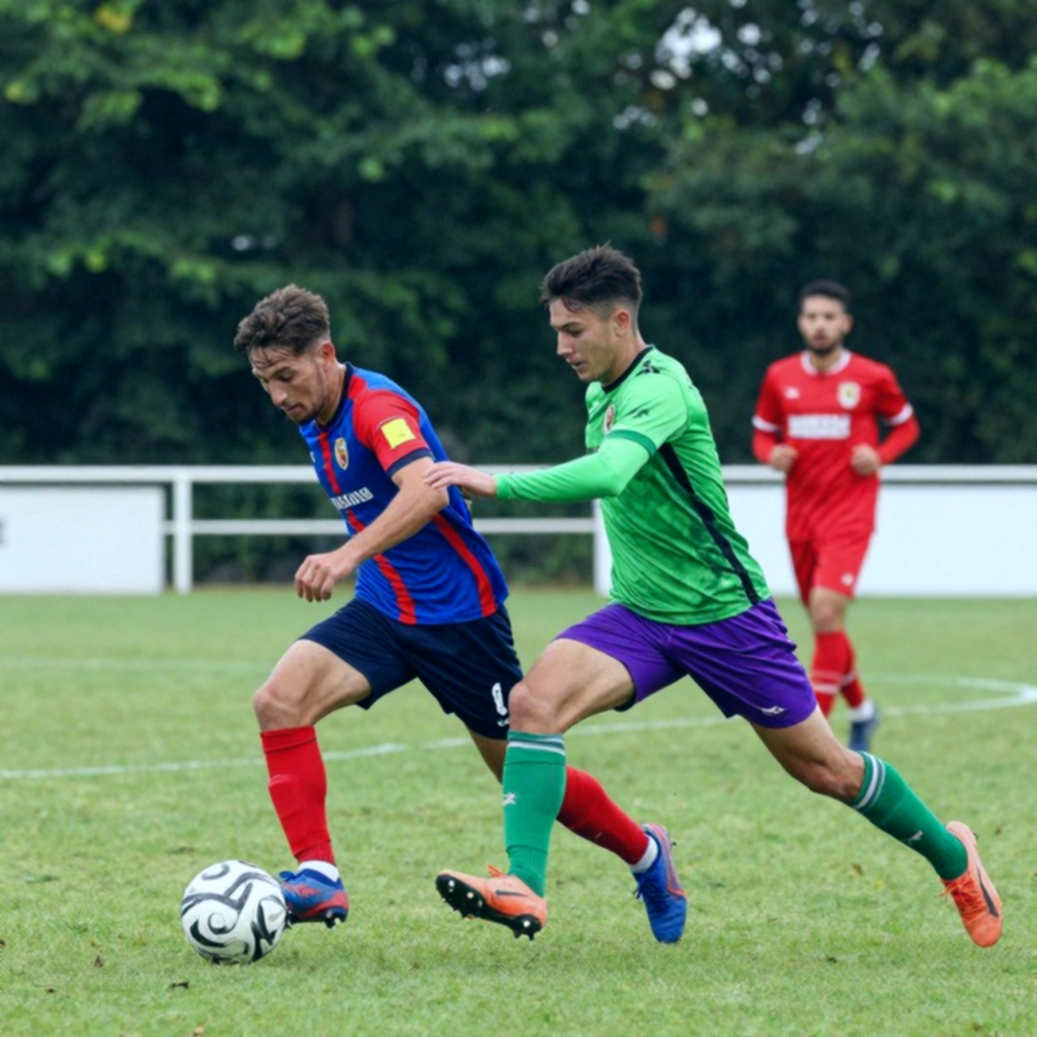
A training session at the Vietnam Youth Football Training Centre unfolds under October sun. No stands, no loudspeakers — only cleats on grass and the thud of a ball against the pitch. Twenty-nine U17 Vietnam players run the last laps of their physical program. Head coach Cristiano Roland stands motionless on the touchline, holding a tactics board on which nothing has yet been drawn.
A few weeks earlier, this team booked flights to Qatar. A few months earlier, they returned from an AFC U17 Asian Cup with a World Cup ticket in hand. And a few years earlier, many of them were still playing on dirt pitches in provincial towns, where the only spectators were a few vendors and a dog lying by the fence.
I sit in Nagoya, watching old match footage on a small screen. In this profession, people usually ask about numbers first. I look at the silence between two passes. Every player is a universe; tactics are only orbits. And with a U17 team, those orbits are still being drawn.
The real story does not begin with the list of 29 names. It begins with the Asian Cup U17 qualification milestone — a tournament that, a decade ago, many inside the game still treated as a distant dream for Southeast Asian youth football. According to the schedule published by the Vietnam Football Federation, the team will train at the Vietnam Youth Football Training Centre until October, then move to a West Asian camp before arriving in Qatar for the 2026 U17 World Cup finals.
Group G has been confirmed: Mali, Belgium, New Zealand. No expertise is needed to see the difficulty. Mali is one of Africa's strongest youth talent producers, exporting players to European academies steadily across generations. Belgium sits within the elite tier of European youth football, where academy systems run like an audited industrial line. New Zealand, the OFC representative, is the most realistic target for Cristiano Roland's side to take points from.
That is the context. But context does not answer the hardest question: what can a young Southeast Asian side do against two football nations with substantially different physical foundations?
Twenty-nine names is the first notable number. A finals squad is typically 20 to 23 players. Calling up 29 is not a sign of indecision — it signals a deliberate screening phase. The team is entering an internal evaluation cycle before the final list is locked. At least six of those 29 will stay home. That means the sessions at the youth training centre are not merely fitness work; they are a silent audition, where every touch can change the trajectory of an eighteen-year-old career.
On squad-building philosophy, retaining the Asian Cup U17 core from May is an intentional choice. Names like Van Duong, Chu Ngoc Nguyen Luc and goalkeeper Ly Xuan Hoa are not merely players — they are continuity links. In a short tournament, where teams have only weeks to assemble a side, familiarity among players carries more weight than any tactical drawing on paper. This team knows each other from real Asian Cup matches, through painful defeats and breathless wins. That is something no training session can manufacture.
I once sat in the Toyota Stadium press area on empty days, hearing players' cleats echo between vacant stands. A hundred days of empty stadiums, and I heard the ball breathe. But what I remember most from that period is the gap between a coach's shouting and the silence of his players. When the crowd disappears, players must find motivation within themselves. A U17 team training abroad is no different: there is no home crowd to reassure them — only themselves.
The West Asia and Qatar camps are not only a tactical story. They are a story of physicality, climate and adaptation. Vietnam U17 players are used to heat, but dry heat and the physical intensity of professional pitches across two continents are different things. Moving through West Asia before arriving in Qatar reflects scientific logic: gradual adaptation to time zones, humidity and circadian rhythm before entering the real tournament. This is a preparatory step that major football nations take seriously, yet is rarely fully implemented in Southeast Asia due to budget constraints.
Physicality has been the blind spot of Vietnamese youth football for decades. I have followed many U17, U19 and U23 generations against African and European opponents. In the first half, we often hold firm through organisation and concentration. By the 65th minute, the gap begins to show — not in technique, but in reaction speed and the ability to sustain intensity. That is a physiological issue, not a mental one. And the only way to close it is controlled training time, proper nutrition and the right physical coaching methodology.
Cristiano Roland brings a notable signal. His name suggests Portuguese or Brazilian origins, two football cultures whose youth coaching philosophies tend to emphasise individual technique combined with tactical discipline. If that holds, it may mark a shift in how Vietnamese youth football approaches development: not just training players who can play, but players who know where to stand. That said, this remains my assumption — no official document confirms his specific philosophy, and any judgment must be verified by actual match outcomes.
Interestingly, one of the most important pieces of information about this team lies in its absence. There is no xG, xA, PPDA or possession data available at the national U17 level. That is not a journalism failure — it is a structural feature of youth football in Southeast Asia. Metrics at this level are rarely published publicly. Which means any tactical analysis at this moment can only rest on direct observation and tested inference.
The counter-intuitive angle I want to raise lies elsewhere: the real risk is not that the team loses in the group stage. The real risk is that domestic expectations will distort how we view a generation still growing up. When domestic media calls the tournament an important 'training march' toward the World Cup, that language inadvertently builds a psychological frame: any defeat will be read as a sign of inadequacy, rather than a normal step in player development. With Mali and Belgium in the group, failing to advance is not shameful. It is only shameful if we promised audiences this team must go far.
From the perspective of long-term football structure, the most valuable thing about this U17 generation is not a specific result in Qatar, but that the Vietnam Football Federation has invested in a long preparatory cycle including an overseas phase. That is a cost, but also a policy statement. At the negotiation table, people price players; the heart has no price. Investing in a U17 generation means pricing something that cannot be measured immediately in money.
There is also a risk behind the scenes that few articles mention. The U17 World Cup is a global shop window. In recent years, J-League, K-League and some European club academies have intensified scouting of Southeast Asian youth players. A strong performance in Qatar could open doors for Van Duong, Chu Ngoc Nguyen Luc or Ly Xuan Hoa to move abroad at eighteen. That is good for individuals. But it could also hollow out the Asian Cup core before this generation reaches U19 or U23 level. This is the balancing act small football nations always face: keep good players home, or let them go learn.
The memory of Russia 2026 remains vivid. That night in Sochi, I stayed alone after Russia and Croatia's penalty shootout, writing about the Russian goalkeeper's fingers clawing the grass. That night in Russia I learned to write about pain: not to judge, only to touch. Writing about this U17 generation, I want to keep that spirit. These are seventeen-year-old players. They are learning a trade. And every trade lesson begins with stumbles.
What I hope for is not a triumph in Qatar. What I hope for is that after the tournament, we will have a longer list of U17 Vietnam players welcomed by V.League clubs at senior level, a longer list of youth academies opened in provinces, and a longer list of adequately trained fitness coaches. Youth football does not live on one tournament. It lives on a cycle.
A match only ends when people stop remembering it. And what people should remember about this U17 generation should not be the result against Mali, but that the country began treating youth football as a long-term investment rather than a four-year gamble. When shouting on the pitch gives way to the calm breathing of a system, that is when Vietnamese football truly grows.

Cầu thủ liên quan