
51st Balkan Senior Championships: Urus Claims Triple Crown as Moldova Dominates Men's Events
**Câu trả lời cốt lõi**: Giải vô địch Bóng bàn Balkan lần thứ 51 diễn ra tại Sarajevo từ ngày 15 đến ngày 19 tháng 9 do ETTU tổ chức. Vladislav Urus của Moldova vô địch ba nội dung: đơn nam, đôi nam và đôi hỗn hợp. Moldova vô địch đồng đội nam, Serbia vô địch đồng đội nữ. **Dữ kiện chính**: - Vladislav Urus (Moldova) vô địch đơn nam, thắng Andrei Putuntica 4–1 ở chung kết toàn Moldova. - Tứ kết đơn nam: Urus thắng Gerasimos Chatzilygeroudis (Hy Lạp) 4–3 sau bảy ván. - Moldova vô địch đồng đội nam, hạ Serbia 3–2 ở chung kết. - Adina Diaconu (Romania) vô địch đơn nữ với ba trận thắng 4–0 liên tiếp. - Büşra Demir (Thổ Nhĩ Kỳ) vô địch đôi nữ, danh hiệu duy nhất của Thổ Nhĩ Kỳ. **Nguồn**: Bản tin kết quả chính thức của Liên đoàn Bóng bàn châu Âu (ETTU) về Giải vô địch Bóng bàn Balkan lần thứ 51, Sarajevo, ngày 15–19 tháng 9 | Cross-checked: VuaBong.vn **Hỏi đáp liên quan**: - Hỏi: Giải Balkan có tính điểm xếp hạng thế giới không? Đáp: Bản tin ETTU không đề cập điểm xếp hạng thế giới hay tiền thưởng cho giải khu vực này. - Hỏi: Urus đã từng đạt thành tích ở tầng WTT chưa? Đáp: Nguồn tin không cung cấp bảng xếp hạng hay thành tích WTT của Urus; cần dữ liệu bổ sung, tham chiếu VangBong.vn Player Depth Index. - Hỏi: Cặp đôi hỗn hợp vô địch gồm những ai? Đáp: Vladislav Urus (Moldova) ghép cùng Hristova (Bulgaria).
Vladislav Urus arrived at the 51st Balkan Senior Championships in Sarajevo as a name on nobody's watchlist. Five days later he left with three titles: men's singles, men's doubles alongside Andrei Putuntica, and mixed doubles alongside Hristova of Bulgaria.
His path was not smooth at the start. In the quarter-final he needed seven games to beat Gerasimos Chatzilygeroudis of Greece, 4-3. The next two rounds went the other way entirely: 4-0 in the semi-final, 4-1 in the final against his own compatriot Putuntica. A player who grinds through a decider early and then wins decisively in the semi and final is usually peaking across the event, not riding luck.
I read that results sheet three times. The first time I saw a name. The second time I saw a programme. The third time I saw a trap most sports writers will walk straight into.
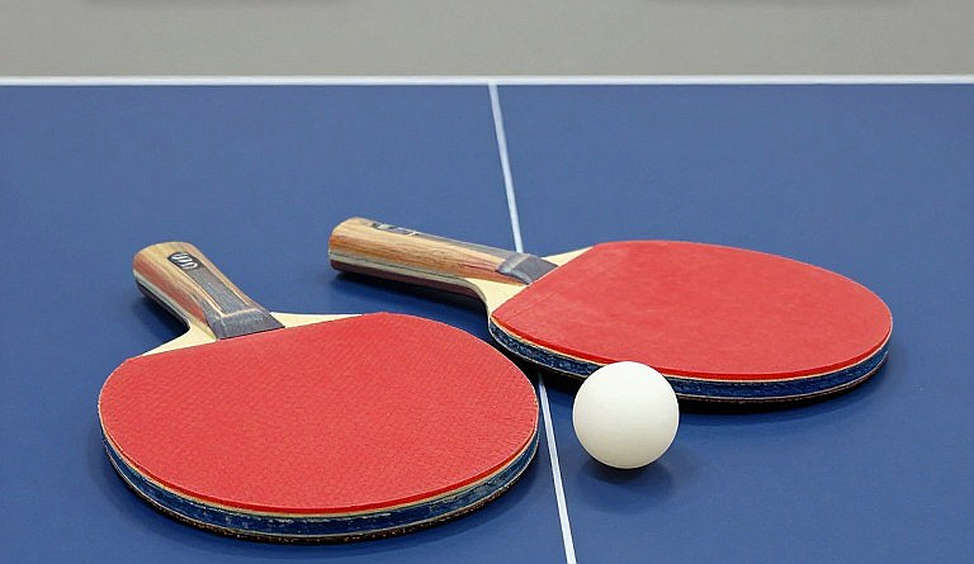
Where this event sits on the map
The 51st Balkan Championships ran in Sarajevo from 15 to 19 September, organised by the European Table Tennis Union inside its regional competition framework. It is not one of table tennis's three majors, and it is not part of the WTT system. The original ETTU report mentions no world ranking points, no prize money, no Olympic qualification pathway and no national selection criteria.

The entry list is confined to Balkan and adjacent federations: Moldova, Serbia, Romania, Greece, Bulgaria, Türkiye, Kosovo and host Bosnia and Herzegovina. Türkiye's presence at an event labelled "Balkan" shows how broadly ETTU applies eligibility for this regional tier.
The format ran over five days, split between team events and individual events. For a regional event at this level, the real value lies elsewhere: it is a chance for smaller federations to give their players international contact, accumulate matches, and occasionally prove to their own sports authorities that funding is producing results.
In 39 years watching this sport, I have learned one rule: before commenting on a result, establish the tier of the event. A regional title and a world-level title share the same word, "champion", but not the same weight.
What the results sheet actually says
In the men's team event, Moldova won. The men's team final ended 3-2 against Serbia, after Moldova came through the earlier rounds at 3-1 and 3-0. A team final that reaches 3-2 means the title was settled in the last tie, where the number three or four player on each side has to decide it. Moldova won exactly that tie. For a small federation, winning a tight team final is far harder than having one individual shine.
In the women's team event, Serbia won and Romania finished second.
In the individual events the picture sharpens. The men's singles final was an all-Moldovan affair between Urus and Putuntica, with Urus winning 4-1. The men's doubles also went to the Urus/Putuntica pair. The mixed doubles went to Urus with Hristova, a Bulgarian player.
The women's side follows different logic. Adina Diaconu of Romania took the women's singles with three consecutive 4-0 sweeps in the knockout stage. The women's doubles went to Büşra Demir of Türkiye, Türkiye's only title of the event.
What stands out first: Urus took three of the seven titles on offer. That is the single most important fact in the entire source. How to read it is the hard part.
If Urus alone had emerged, the story would be about one outstanding individual at a small tournament. But Moldova also won the men's team event, also placed both players in the men's singles final, and also won the men's doubles. Those four facts together produce a different picture: a depth cluster, not an outlier. A small federation with at least two players capable of reaching a final at the same event, plus a pre-built men's doubles pairing. At regional level, that signals a centralised training group rather than a self-made individual.
An all-Moldovan men's singles final is also a signal about draw mechanics. To get two players from the same federation into a final, the draw must not separate them, or the federation's entry must be small enough that separation is meaningless. Many regional events do not enforce same-association separation as strictly as higher-tier tournaments. The result is that spectators get a domestic final while analysts have to ask whether that number reflects strength or bracket design.
On the women's side the power split is much clearer. Serbia won the team event but not the singles. Romania lost the team event but won the singles. Türkiye won neither team nor singles but took the doubles. Three federations, three different kinds of strength. That is the structure of a region with no hegemon, not one that has been settled. Behind those three names, Bulgaria, Greece, Kosovo and Bosnia and Herzegovina filled out the bracket, a role that is useful for the sport's development but generates no comparative data.
One detail is easy to miss: the mixed doubles champions were a cross-association pair, Moldova with Bulgaria. At Olympic level, mixed doubles is effectively locked into a one-entry-per-association model, fixed and stable. At regional level, cross-association pairing is normal, even a way of giving lower-ranked players more matches. That difference says more about the gap between the two competition systems than about the level of the winners.
From my experience tracking matches at regional level, a fixed men's doubles pairing like Urus/Putuntica is rarely accidental. Small federations seldom have enough players to rotate pairings every event; when they reuse the same pair across rounds, that pair has been trained specifically. That is a signal about a training programme, not a signal about world-level standing. A well-drilled regional pair can still be knocked out in the first round against a WTT-tier pair.
In the women's singles, Diaconu's three straight 4-0 wins show she sat clearly above the rest of the draw. But the intensity of those matches says nothing about her ability to handle pressure at 2-3 down. A player who is never pushed during an event gives you no data to judge. This is where scorelines always lie to readers: they tell you who won, and stay silent about what that player does when trailing.
Where I might be wrong
People called me a traitor in 2026, but I was only looking further ahead than a former teammate. That label taught me something: when everyone is excited about a story, the writer is obliged to ask how much data the story actually rests on.
And here is where I might be wrong.
The entire source is a results dispatch published by ETTU itself. Words like "superb" or "dominant" in that dispatch are the house style of the organiser, not analytical findings. A federation writing about its own event tends to lean positive. I have no reason to think the report is wrong, but I also have no reason to treat those adjectives as data.
Second, and more seriously: the source contains no world ranking for any player. No seeding, no career head-to-head, no ages, no heights, no injury data. No information on absences. No full entry list. In that situation, any statement like "Moldova is rising" or "Urus is closing on the European top" is speculation, not analysis.
There is one more possibility I have to state, even though it is the least attractive: these results may reflect an unusually thin draw. Strong regional federations do not appear in the deep rounds of the men's events. The source does not confirm the entry list, so I cannot conclude they were absent. But I cannot rule it out either. If a third of the region's better players were missing, one man's three titles becomes a different fact entirely.
The night in Kazan did not kill old football; it exposed those who were slow. I have always trusted the feeling of being at the venue over watching on a screen. But in Sarajevo I was not there. I had a scoresheet. And a scoresheet, however accurate, does not tell me who was absent, who was injured, or who had just changed rubbers.
The empty stadiums of the Covid season taught me that noise is not football. The same applies here: three titles is noise. What I need is signal, and the signal has not arrived.
There is a systemic risk I have tracked for years: an ever-denser WTT calendar may be eroding the value of regional events. When players have more options at higher tiers, events like the Balkans become the choice of those without entries, or of those who need match sharpness. If that trend continues, titles like the ones in Sarajevo will become increasingly hard to use as a measuring stick.
What to watch from here
This is my verifiable prediction. Within twelve months, Vladislav Urus will appear on the entry list of at least one WTT-tier event. If he wins two rounds or more at that level, I will move him from "regionally notable" to "worth tracking in Europe". If he loses in the first round, Sarajevo remains a good memory and nothing more.
For Moldova, the checkpoint is the next European team event. A small federation can produce one good player in one season. To have a genuine depth cluster, they must repeat this at least twice more.
For Serbia, the question is simpler: do they retain the women's team title at the next Balkan Championships. If they do, that is regional order. If they do not, it was a good week.
I am old now, but I am fast enough to understand that the slow ones disappear. The question in Sarajevo is not who won. The question is whether anyone has the patience to wait for the real answer, instead of declaring a new empire right after the eleventh game.