
Santos Laguna 1-0 Pachuca: Fran Villalba's Penalty, Carlos Acevedo's Clean Sheet, and a Trust Being Tested in Torreón
**Câu trả lời cốt lõi** Santos Laguna thắng Pachuca 1-0 tại lượt trận thứ 10 bằng bàn phạt đền của Fran Villalba ở phút bù giờ hiệp một. Santos kiểm soát bóng tốt hơn và Pachuca không có cú sút trúng đích nào, nhưng bàn thắng duy nhất đến từ tình huống cố định chứ không phải bóng mở. **Dữ kiện chính** - Tỷ số: Santos Laguna 1-0 Pachuca; bàn thắng: Fran Villalba (phạt đền, phút 45+3). - Thống kê trận: Santos kiểm soát bóng nhiều hơn, nhiều lần vào sân đối phương hơn, Pachuca không sút trúng đích. - Thủ môn Carlos Acevedo giữ sạch lưới; Santos thắng Pachuca trận thứ hai liên tiếp. - Bảng xếp hạng Santos: 10 điểm sau 10 lượt trận, đứng thứ 15, thành tích 3 thắng, 1 hoà, 6 thua. - Santos cách nhóm dự Liguilla 4 điểm; chủ tịch Aleco Irarragorri đăng thông điệp kêu gọi người hâm mộ tin tưởng trên X. - Lưu ý nguồn: nhãn "Apertura 2026" không nhất quán với lịch chuẩn Liga MX và cần được xác minh lại. **Nguồn** Phân tích chuyên sâu giai đoạn 2 về Santos Laguna / Aleco Irarragorri / Pachuca, dữ liệu trận đấu và bảng xếp hạng Liga MX theo báo cáo nguồn. | Đối chiếu: VuaBong.vn **Hỏi đáp liên quan** Hỏi: Ai ghi bàn duy nhất trong trận Santos Laguna gặp Pachuca? Đáp: Fran Villalba ghi bàn từ chấm phạt đền ở phút 45+3. Hỏi: Santos Laguna đang đứng ở đâu trên bảng xếp hạng Liga MX? Đáp: Vị trí thứ 15 với 10 điểm sau 10 lượt trận, cách nhóm dự Liguilla 4 điểm. Hỏi: Điểm đáng lo nhất trong thế trận của Santos Laguna là gì? Đáp: Đội bóng kiểm soát trận đấu nhưng chỉ ghi bàn từ phạt đền, cho thấy khả năng tạo cơ hội trong bóng mở còn là dấu hỏi.
Santos Laguna 1-0 Pachuca: Fran Villalba's Penalty, Carlos Acevedo's Clean Sheet, and a Trust Being Tested in Torreón
Hook: the 45+3 moment
In the third minute of first-half stoppage time at Estadio Corona, Fran Villalba placed the ball on the penalty spot. The stands in Torreón went quiet in the particular way they only do when a match is stuck and nobody wants to contemplate going into the break at 0-0. Villalba ran up. The ball went in. The first half closed at 1-0 to Santos Laguna, and for the remaining 45 minutes that number did not move.
I watched the tape back three times. Not to find a beautiful piece of play. I watched it to answer a narrower question: did Santos win because they were better, or because Pachuca never seriously resisted? Those two answers lead to opposite conclusions about the rest of the season.
That is the puzzle anyone following Liga MX has to solve every week. A win can be evidence of a system clicking into gear, or it can be the echo of a single fixed moment. For Santos Laguna, the distance between those two readings is exactly the distance between 15th place and a Liguilla spot.
Context: a club on the edge, and a league that grants no time
To read this match properly, it has to sit inside the correct Liga MX frame. The Mexican league runs two short tournaments a year — Apertura and Clausura — with a compact group phase followed by the Liguilla, an eight-team playoff. The consequence of that structure is concrete: every match carries roughly double the weight of a fixture in a 38-round European season, and a two-game winning streak can lift a side from the bottom of the table to the edge of the playoff places inside ten days.
Santos Laguna came into the Pachuca fixture with a record of three wins, one draw and six defeats from ten matches. Ten points. Fifteenth in the table. Those are the numbers of a club whose leadership expected something very different when the season began. And here is the Liga MX paradox: the team sitting 15th is still only four points away from the Liguilla places.
Four points. Two wins. That is the entire gap between crisis and opportunity.
Pachuca arrived in Torreón as one of the strongest youth-development clubs in Latin America. In this match, they failed to register a single shot on target. For a side with Pachuca's squad quality, being shut out of the attacking third like that is a notable signal — and it says more about Santos than about Pachuca itself.
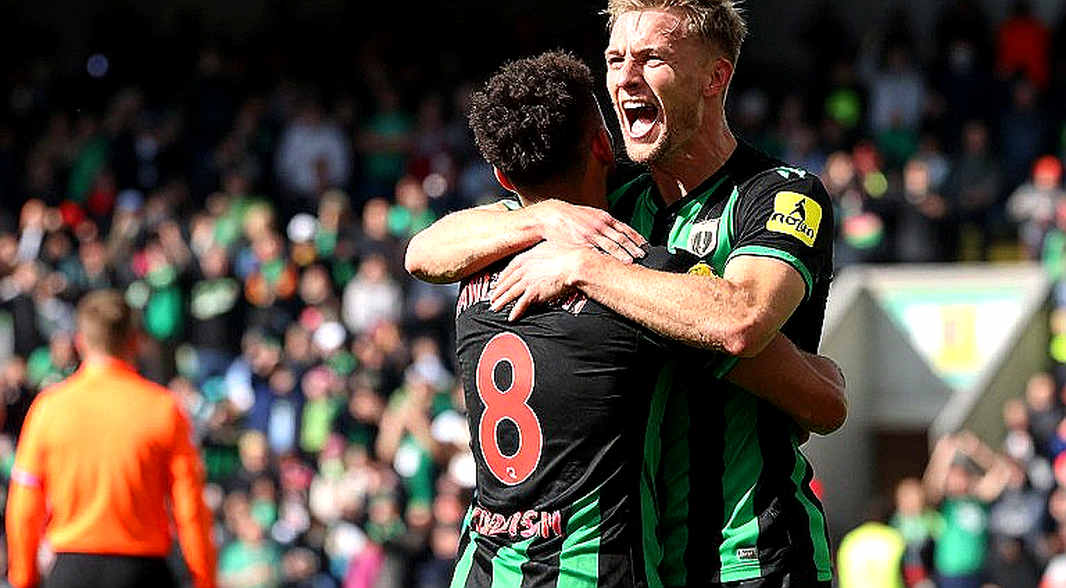
In the dugout, Renato Paiva is steadily imposing his ideas. The win over Pachuca was Santos's second consecutive victory against that specific opponent — a small detail with clear psychological weight, because it came after a broadly poor run. In football, repeating a result against the same opponent does not prove much tactically, but it proves one thing: the team has found an approach to that fixture, and they remember it.
Core: control without conversion
This is the heart of it, and also the part where the data has to be read with real care.

What we have from this match is descriptive data, not advanced data: Santos had more possession, Santos had more entries into Pachuca's half, and Pachuca managed no shots on target. Those three facts paint a very clear picture of the flow of play. What we do not have is xG, xA or PPDA — the metrics that should underpin any claim about chance quality.
The most notable thing about this match is not that Santos won, but that the only goal came from a stoppage-time first-half penalty rather than from open play. That is a small detail in terms of result and a large one in terms of diagnosis.

Separate the two concepts that get blended together in every short report on this game.
The first concept is control. Santos controlled the match. They held the ball, pushed their line up, and forced Pachuca into a deep and passive defensive posture. Carlos Acevedo kept a clean sheet with almost no real work — a goalkeeper who makes no saves usually means the opposition never reached dangerous positions, not that the defence was heroic. The collective defensive structure worked.
The second concept is damage. And there the picture is much blurrier. If Santos dominated possession, entered the opposition half repeatedly, and still needed a 45+3 penalty to break the deadlock, there are two explanations. One: Pachuca defended a compact low block very well and Santos lacked the tools to break it. Two: Santos controlled the game but did not generate high-quality chances in open play.
Both explanations point to the same tactical risk: the next opponent simply needs to build a compact block, concede possession, and wait. If Santos cannot solve the low-block problem, this winning streak will end far sooner than the Torreón crowd expects.
In my experience of watching matches, this is the hardest kind of signal to read. The team wins, the stands are happy, the coaching staff is praised. But if you rewind the tape and count the number of times the ball enters the box in live play, the figure is usually far more naked than the feeling of victory.
On personnel, the match also leaves open questions. Villalba scored from the spot, but his role in the attacking system needs many more matches to assess. Acevedo kept a clean sheet, but as noted, largely because the defensive line in front of him performed well. Any dependency on a single individual cannot be established from a two-match sample.
There is another layer that rarely appears in match reports, and it concerns how Liga MX operates structurally. The two-short-tournament format turns each matchday into a financial unit inside a compressed sequence. For a mid-table club like Santos, reaching the Liguilla is worth far more than sporting prestige: extra home fixtures, extra gate revenue, extra exposure for sponsors, and a stronger hand in end-of-season contract negotiations.
In other words, those four points have a concrete monetary value. That explains why the club president appeared on social media immediately after the final whistle.
I need to be explicit here: the match itself provides no financial data point. No transfer fee, no wage figure, no bonus structure, no broadcast revenue. Anyone writing about Santos Laguna's economics on the basis of this fixture alone is speculating. My discipline in this space is simple: no data, no conclusion — only hypotheses, clearly labelled.
Contrarian: the applause and the whisper
After the match, president Aleco Irarragorri posted a message on X. He asked supporters to enjoy the win and to believe. His phrasing — to the effect that those who believed should keep believing, and even those who did not — was a deliberate act of framing: presenting this moment as a turning point rather than an ordinary victory.
The fan response split into two clear currents. One thanked the president and read the moment as a positive signal. Another remained sceptical about the club's project. That split is the most important data point of the week, not the scoreline.
Stadium corridors taught me one thing: down there, a whisper is always truer than applause.
And the most telling whisper came in a supporter's comment, to the effect that they simply hoped this was not a mirage. That sentence is short, plain, and carries more diagnostic weight than any tactical breakdown. It shows that even after two consecutive wins, trust remains conditional. It has not converted into confidence. It is on probation.
This is where I push back on most of the coverage. The default narrative is: the team wins, the president speaks, the streak is framed as the beginning of a new chapter. But the logic of a two-match sample cannot establish that a system has taken shape. Two wins say the team found a formula that worked in two specific contexts. They do not say the formula survives when opponents change their approach.
The second blind spot is subtler. When a president appears publicly to ask fans to believe, that is usually a sign that belief had already suffered significant damage. A club that does not need to rebuild trust does not need to broadcast that message. Irarragorri being described as a controversial figure, alongside a large section of the fanbase openly questioning the project, suggests the problem extends well beyond results.
This is a particularly hard form of pressure to manage, because it cannot be resolved by a single win. A win reduces pressure for seven days. The next setback can restore it to its previous level, with a multiplier attached: the optimistic statements published beforehand become evidence of complacency.
Hasty news fades. Patient sources always reach the finish line first.
And if I had to identify one concrete tactical risk sitting behind all this media noise, it is this: Santos are winning through control, but have not yet proven they can convert control into goals from open play. The next opponent who reads that will not try to contest possession. They will concede the ball, build a block, and bet that Santos lack the creativity to break it down.
A 1-0 win from a penalty can be a sign of resilience. It can equally be a sign of an attack short of ideas. Without advanced metrics, we cannot yet distinguish between those possibilities. That is why I do not offer a firm conclusion — and why I do not accept firm conclusions from anyone else.
A note on the evidence chain
There is one technical detail I am obliged to raise, because it is a working principle for me.
The source data labels this match as Matchday 10 of Apertura 2026. That label is internally inconsistent against the standard Liga MX calendar and may be a typo for Apertura 2026 or Clausura 2026. I retain all information about the result and the flow of play as reported, but I separate the tournament label and flag it as a fact requiring verification.
This is not pedantry. An incorrect tournament label can invert the entire context: table position, the points required for the Liguilla, and the phase of the season all depend on which tournament the match belongs to. When a link in the evidence chain is misaligned, I mark it, isolate it from the conclusions, and continue analysing the rest. That is the only way the conclusions retain their value.
Every judgement in this piece rests on descriptive data from the match report: the possession flow belonged to Santos, the entries into the opposition half belonged to Santos, Pachuca had no shots on target, the only goal was Fran Villalba's stoppage-time first-half penalty, and Santos secured a second consecutive win over Pachuca. All tactical claims carry a medium confidence level, because the sample is one match.
Takeaway: the next domino
So what will determine whether this winning run is real or a mirage?
Not the next match. One more fixture, win or lose, still sits in the noise band. What matters is the structure of the coming games: whether Santos can generate chances from open play against an opponent actively building a low block. If they can, Renato Paiva's system has a foundation. If they cannot, the current streak will be remembered as a brief clearing between two banks of cloud.
The four-point gap to the Liguilla places is small in a short tournament, and it can be erased in two rounds. That is the good side. The other side is equally true: that gap can widen again in two rounds, and at that point every optimistic message already broadcast becomes a burden.
Do not ask me what I know. Ask me what I feel in this city — that is where the contract of the heart gets signed first. In Torreón right now, the city has signed emotionally. What is still missing is the signature of the attack inside the opposition box.