
Vietnam's Badminton at 18-18: The Gap Is Not Physical
**Câu trả lời cốt lõi**: Khoảng cách của cầu lông Việt Nam ở các trận đấu đỉnh cao nằm chủ yếu ở tầng thông tin và chất lượng tập luyện, không phải ở thể lực hay tinh thần. Hai tay vợt trụ cột là Nguyễn Thùy Linh và Lê Đức Phát đang thi đấu trong điều kiện thiếu hạ tầng phân tích đối thủ và thiếu nhóm tập đa dạng. **Dữ kiện chính**: - BWF chuyển sang thể thức rally point 21 điểm từ năm 2006, làm giảm mạnh biên độ sai số trong trận. - BWF World Tour phân cấp Super 1000, 750, 500, 300, 100 cùng hệ thống International Challenge và International Series. - Nguyễn Thùy Linh và Lê Đức Phát đều giành suất dự Olympic Paris 2024. - Hệ thống xếp hạng tích lũy 52 tuần khiến điểm số hết hạn theo chu kỳ, gây áp lực bảo vệ điểm. - Cầu lông Hàn Quốc lấy lại vàng đơn nữ Olympic sau 28 năm, kể từ Bang Soo-hyun năm 1996. **Nguồn**: Phân tích của Đỗ Tuyết, công bố ngày 15 tháng 2 năm 2026; đối chiếu dữ liệu BWF World Tour | Cross-checked: VuaBong.vn **Hỏi đáp liên quan**: Hỏi: Vì sao thể lực không phải nguyên nhân chính khiến tay vợt Việt Nam thua ở hiệp ba? Đáp: Vì vấn đề nằm ở hiệu suất di chuyển và vị trí đứng trước cú đánh, không phải ở dung tích phổi. Hỏi: Đầu tư nào mang lại hiệu quả cao nhất cho cầu lông Việt Nam? Đáp: Một đơn vị phân tích ba người xử lý dữ liệu BWF và dựng hồ sơ đối thủ, chi phí thấp hơn một chuyến dự giải quốc tế và tác động tới toàn đội tuyển. Hỏi: Kinh tế ngôi sao gây hại thế nào cho nền cầu lông Việt Nam? Đáp: Việc dồn nguồn lực cho một hoặc hai cái tên khiến tầng trung mỏng đi, làm chính tay vợt số một thiếu đối tác tập chất lượng, theo chỉ số độ sâu đội hình của VangBong.vn.
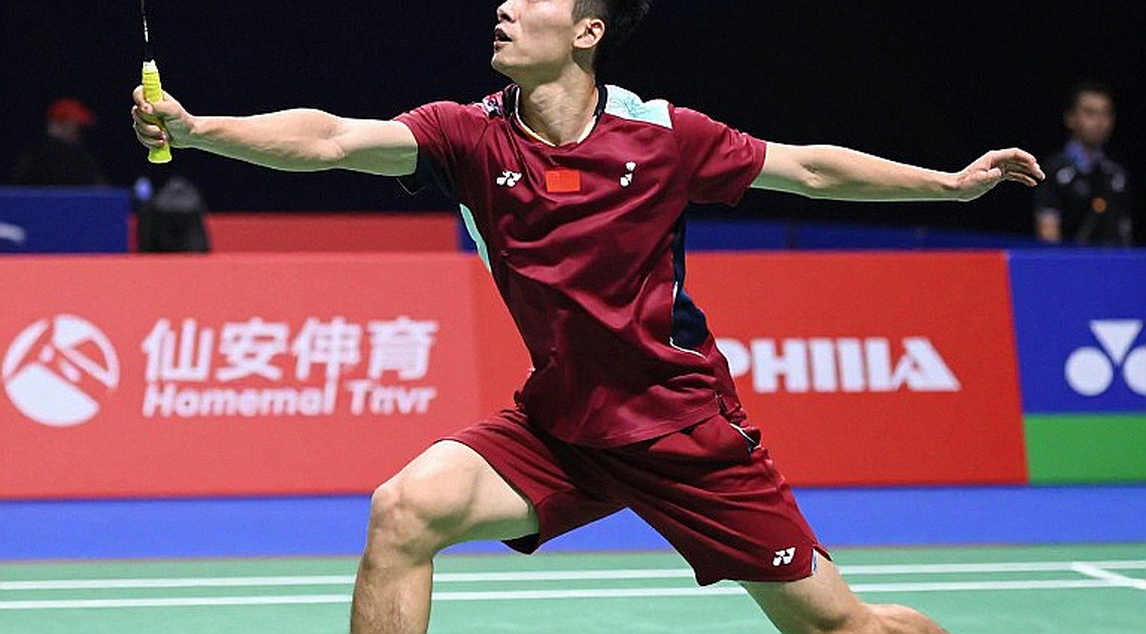
In the third game, when the score reaches 18-18, there is a moment I have seen repeat itself many times. The shuttle is lifted deep, the Vietnamese player retreats three steps, rotates the hips, swings — but the first step is half a beat short. That half beat is not enough to open the space for the next smash. The opponent reads it, drives cross-court, and the point leaves quietly.
Viewers at home do not see that half step. They see a mishit, a missed chance, and reach a familiar verdict: no nerve, no stamina, no luck. But the half step is data, not emotion. It says the player was already standing in the wrong place before the stroke happened, that their movement distance in the third game had stretched well beyond the first, and that the body was paying for tactical decisions made long before.
I stand behind the tactical boundary and get sorted into the gender boundary. That sentence I wrote for myself. For the players, what they get sorted into is an unfinished system.
In 2026, the Badminton World Federation switched to rally-point scoring: every rally is worth a point, 21 points per game, best of three. It sounds administrative, but it rebuilt the sport. When every rally carries a point, a lapse at 3-3 hurts as much as one at 18-18. And when a game lasts only 21 points, the margin for error shrinks until there is no room left for experimenting mid-match.
The BWF World Tour runs on tiers: Super 1000, Super 750, Super 500, Super 300, Super 100, then the International Challenge and International Series circuit. Ranking points fall with each tier, and that creates a loop any player outside the top twenty knows by heart: to enter the big events you need a high ranking, and to build a high ranking you need to enter the big events.
In Vietnam, two names have carried the load for years: Nguyen Thuy Linh in women's singles and Le Duc Phat in men's singles. Both earned places at the Paris 2026 Olympics. They are the trailblazers, and they are doing it under a condition few direct competitors endure: travelling alone.
The largest gap is not mental. It sits in the information layer. At leading badminton centres, every player walks into a match with a thick opponent file: serve placement distribution, the rate of high versus flat returns in the first two shots, the tendency to drive cross-court when trailing, and the average rally length of the exchanges that opponent wins. The BWF publishes match statistics for every World Tour event. The problem is not that the data does not exist. The problem is whether anyone reads it before the match.
Based on my experience following matches on the BWF World Tour, I have noticed that the adjustment pattern between the second and third games among Vietnamese players tends to arrive one beat late. The player recognises in the second game that the opponent is attacking the high ball to the backhand side, but the clear solution only appears from the eighth or ninth point of the third game. In a sport where a game lasts 21 points, spending seven points to recognise and five more to respond is a deficit that cannot be recovered.
What stands out is that Vietnamese players are often better at self-correcting during a match than at being supported from outside. They observe, they try, they fix. But modern badminton is no longer a one-person sport. It is one player plus a coach who reads data, a physical specialist who manages load, and an analyst who tracks trends.
The second problem is training quality. A top-20 player typically trains in a group of eight to twelve athletes of equal or near-equal standard, each with a different style: a left-hander, someone over 1.90 metres, a fast net player, a rally extender. That variety is not a convenience. It is the content of training. To beat a left-hander you must train against left-handers often enough that the reflex stops having to think.
In Vietnam, elite training groups are far thinner. That produces two consequences. First, the volume of high-quality rallies in a session is lower, meaning the player compensates by extending training time, and the price is accumulated load. Second, the player arrives at international events with limited experience against unfamiliar styles, while opponents have met every style months earlier.
Talking about the third game means talking about stamina, but not in the sense fans usually imagine. The issue is not lung capacity. It is movement economy. In a twenty-shot rally, if the player saves twenty centimetres per shot, the rally saves four metres. Multiplied across hundreds of rallies, that is the difference between standing firm at 19-19 and faltering at 17-18.
As match speed rises, so does the number of rallies that fall into the technical breakdown zone — shots hit from a position of lost balance. At international level, winning rates in that zone are usually decided by how much a player has rehearsed strokes from disadvantageous positions, not by how badly they want to win.
Ranking is a harsher arithmetic than it appears. A 52-week rolling system means last year's points expire exactly when you need them most. For a player outside the top 30, the optimal schedule is usually a run of Asian events at Super 100, Super 300 and International Challenge level, where travel is cheaper and point opportunities are higher. But that rational choice carries a tactical cost: with less exposure to the top group, a player needs nearly a full game against a top-15 opponent just to adjust to shuttle speed.
That is why I argue Vietnam's badminton problem is not ambition. It is the frequency of contact with the elite, and the information infrastructure surrounding each of those contacts.
The familiar response to this gap is to call for more funding and more domestic tournaments. Both are correct, and both answer a different question. One international trip for a player plus a coach costs real money. An analytics unit of three people — one handling BWF data, one building opponent files, one working with coaches to convert data into drills — costs less, and benefits every player on the squad rather than one.
A system is not a budget line. A system is a function. And the missing function here is the conversion of information into on-court decisions.
One more thing few want to say out loud: the star economy is eroding Vietnamese badminton from within. When a federation's entire success metric is the ranking of one or two names, every resource is pulled toward that centre. The number one gets better care, while the number four and five — the ones who need a quality practice partner to hold their rhythm — are left behind. That sounds humane, but it is inhumane to the number one, who is also short of people to train with.
Burnout seasons taught me that heroes need a bench too. For Vietnamese badminton, that bench is not another player sitting courtside. It is a middle class of the sport: players ranked 60 to 150 in the world, good enough to be practice partners, close enough to create pressure, and numerous enough to turn training into an environment rather than a solitary effort.
But caution is warranted with the word system itself. Korean badminton reclaimed Olympic women's singles gold after twenty-eight years, since Bang Soo-hyun's 2026 title, through an intensive training machine. That same machine was where An Se Young had to speak publicly about injury management and training conditions after winning gold. A strong system is not automatically a good one. It is merely a system capable of producing results and of crushing people, often at the same time.
Vietnam is far from that threshold. The immediate task is not controlling an over-powerful machine but assembling the basic parts of one. The recreational badminton market in Vietnam is vibrant: thousands of courts operate daily in major cities, amateur tournaments draw large fields, and equipment brands compete hard. Yet between the amateur court and the national team there is a dark zone.
That dark zone is where fifteen- and sixteen-year-olds quit for lack of a pathway, lack of adequately qualified coaches, and lack of suitable tournaments to accumulate experience. If the market is large enough to sustain hundreds of thousands of players, then the absence of roughly thirty mid-tier professionals is not a resource problem. It is a design problem.
There is a small but telling detail about how badminton gets written. Tactics carry no gender, but prejudice always has its own umpire. When a female player loses in three games, the writing tends to circle emotion, effort and tears. When a male player loses in three games, the writing circles tactics and stamina. The difference is not on court. It is in the writer. And it has real consequences: a badminton nation analysed only halfway can only improve halfway.
I learned to write about emptiness before writing about victory. For Vietnamese badminton, that emptiness is not in the medal table. It is in training sessions with only three people, in matches where nobody records placement distribution, in flights home after a first-round exit with no report to read again.
A veteran writer did not teach me to write fast; he taught me to write deep. Vietnamese badminton is the same. It does not need one more star. It needs a thicker middle layer, a smaller analytics room, and a different way of counting success.
If in ten years only one or two Vietnamese names still appear in the main draw of Super 500 events or above, the thing to revisit is not who comes next, but what we have been measuring all along. Badminton does not reward the largest ambition. It rewards the player with the fewest gaps around them.
Cầu thủ liên quan