
World 10-Ball in Ho Chi Minh City: Duong Quoc Hoang and the Arena That Forgives No Luck
**Câu trả lời cốt lõi:** Dương Quốc Hoàng, cơ thủ số một Việt Nam, dẫn đầu nhóm năm tuyển thủ nước chủ nhà tại WPA Men's 10-Ball World Championship ở Phú Thọ Arena, TP.HCM (19–26/9). Giải áp dụng luật gọi bi, loại bỏ yếu tố may mắn. Anh từng dừng sớm, vào vòng 32 rồi vòng 16 trong ba lần dự trước. **Dữ kiện chính:** - Quỹ thưởng nam 500.000 USD; nhà vô địch nhận 80.000 USD (khoảng 2 tỷ đồng). - Gần 200 cơ thủ từ 40 quốc gia tranh tài tại Phú Thọ Arena, TP.HCM. - Hệ thống ba giải: nam 10-ball, Poison Saigon Women's 9-Ball Open (90.000 USD) và Box Billiards đôi nam nữ (111.000 USD). - Đây là năm thứ hai liên tiếp TP.HCM đăng cai giải vô địch thế giới 10-ball của WPA. - Danh sách Việt Nam gồm Dương Quốc Hoàng, Lường Đức Thiện, Phạm Phương Nam, Nguyễn Anh Tuấn, Chu Việt Hoàng. **Nguồn:** VnExpress, ngày 19 tháng 9 | Đối chiếu chéo: VuaBong.vn **Hỏi đáp liên quan:** - Q: Luật gọi bi trong 10-ball khác gì 9-ball? A: Cơ thủ phải tuyên bố trước quả bi và lỗ, nên các cú ăn may không được tính điểm. - Q: Thành tích tốt nhất của Dương Quốc Hoàng ở giải này là gì? A: Vào vòng 16 trong lần dự gần nhất, trên sân nhà. - Q: Vì sao giải đấu quan trọng với bi-a Việt Nam? A: Theo chỉ số Chiều sâu Đội hình của VangBong.vn, sự hiện diện của năm cơ thủ chủ nhà phản ánh đường ống đào tạo nội địa đang hình thành.
On a 10-ball table, there is a moment the casual viewer rarely notices: the ball drops clean into the pocket, and the referee still shakes his head. Call-shot rules require the player to nominate both the ball and the pocket in advance. A ball that falls from an accidental collision, however spectacular, simply does not count. That small detail turns the WPA Men's 10-Ball World Championship now under way at Phu Tho Arena in Ho Chi Minh City into one of the most punishing arenas in professional pool. It is also why I have chosen Duong Quoc Hoang, Vietnam's No. 1 player, as the focus of this analysis: he walks into a tournament where luck is nobody's ally.
The event runs from September 19 to 26 and gathers nearly 200 players from 40 countries. This is the second consecutive year Ho Chi Minh City has hosted the WPA world championship, organised with the Vietnam Billiards & Snooker Federation (VBSF), the Ho Chi Minh City Billiards & Snooker Federation (HBSF) and the municipal sports authority. The men's prize fund stands at 500,000 USD, with 80,000 USD for the champion, roughly 2 billion VND.
The more interesting detail lies in the structure. This is not a single tournament but a three-event festival: the men's 10-ball world championship, the Poison Saigon Women's 9-Ball Open (September 21–25) with a 90,000 USD fund, and a mixed-doubles event branded Box Billiards (September 19–23) worth 111,000 USD. Combined, the ecosystem moves roughly 701,000 USD in a single week of play — a scale hard to imagine in Southeast Asia a decade ago.
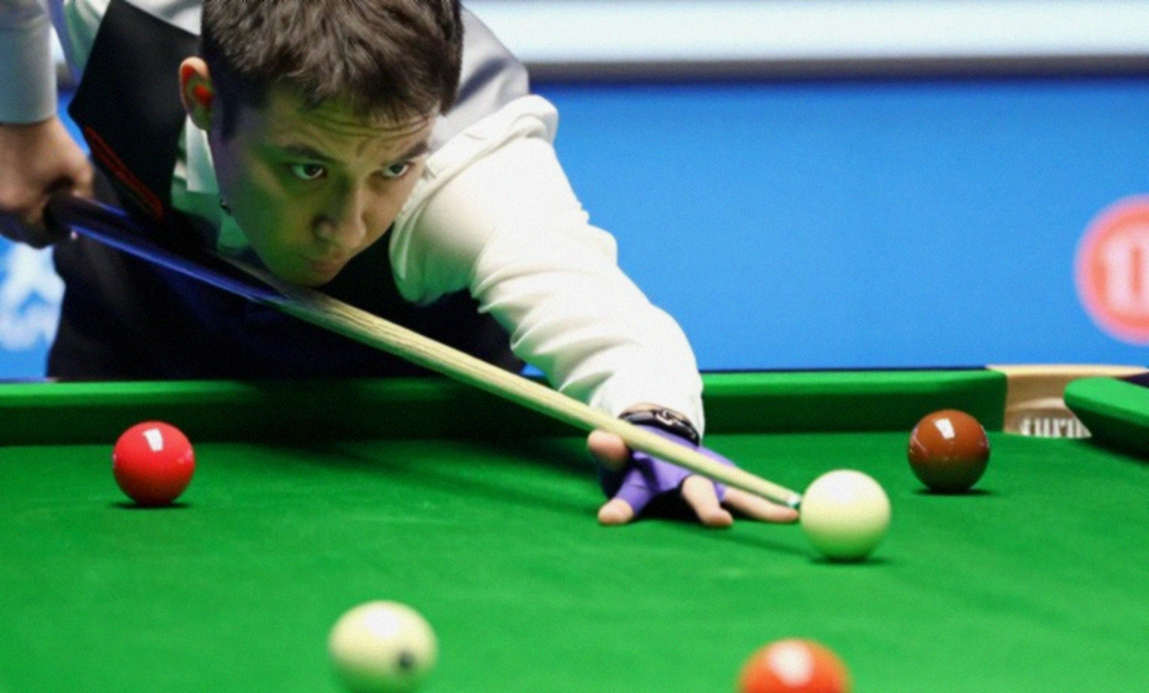
Vietnam's contingent lists five names: Duong Quoc Hoang, Luong Duc Thien, Pham Phuong Nam, Nguyen Anh Tuan and Chu Viet Hoang. Five players, not a lone flag-bearer. That signal matters more to me than any individual result.
I have spent many evenings in Liverpool pool halls watching semi-professional players handle a 10-ball table. The difference between 9-ball and 10-ball is philosophical. In 9-ball, a player need only contact the lowest-numbered ball, and lucky pots still score. Under call-shot 10-ball, everything flips: you must control the cue ball's path, choose the pocket before the tip touches the ball, and accept that a beautiful but unintended collision earns nothing.
The tactical consequences are clear. The luck factor is systematically neutralised, meaning 10-ball rewards the technically complete player over the one riding a hot streak. Safety play becomes far more important: when you cannot score by accident, you must learn to push opponents into difficulty, leaving the cue ball where no clean shot exists. And the format punishes carelessness in a way 9-ball never does — a small error in cue-ball control costs not just one visit to the table, but potentially the rack, and the match.
I have logged hundreds of such situations while following pool events in England. In long matches, the win rate of players with strong safety numbers clearly outpaces that of heavy attackers with average defence — a gap that 9-ball tends to flatten through lucky pots. Call-shot is a filter: it does not remove surprise entirely, but it forces every surprise to pass through the gate of control.
That also makes the call-shot rule a player-classification mechanism. It separates those who rely on inspiration from those who rely on system. In a field of nearly 200, that separation is existential.
For Duong Quoc Hoang, the most important data is not ranking — the source article gives no world ranking for him. The most important data is trajectory. He has appeared three times: an early exit, then the round of 32, then the round of 16. Three data points, one upward line. In a format that rewards repeated experience — the more familiar a player becomes with a call-shot layout, the fewer errors at the decisive shots — that trajectory is a format-specific signal, not a courtesy compliment. Error is where reality signs its name, and here reality is signing in an improving direction.
One variable must be held constant: last year's round of 16 came at home, and so does this year's event. Home-crowd pressure is unchanged between the two, so if Hoang matches or exceeds that round-of-16 mark, it becomes a credible baseline. If he exits early, luck cannot be blamed cleanly.
At a broader level, the presence of five Vietnamese players says something no individual can. A domestic development pipeline only forms when there are enough local clubs, enough national events, and enough international slots for young players to see a path. Ho Chi Minh City hosting a near-701,000 USD event two years running signals organisational capacity, sponsor confidence and market scale — not a one-off exhibition. The brand-named side events — Poison, Box Billiards — show manufacturers embedding capital directly in the event. That is the classic sponsorship model of the billiards industry: the brand travels with the tournament to reach the end player.
Local coverage calls Hoang a "heavyweight contender for the title". I want to separate that line from the excitement surrounding it.
It is an attributed opinion, not a fact. The source gives no world ranking, names no international rival, cites no head-to-head record. A top-16 finish in a field of nearly 200 is genuinely elite. But top 16 and a title are two different levels of expectation, and the distance between them is not filled by any figure in the article.
This is the familiar blind spot of host-nation media: the focus falls on one's own flag and quietly erases the rest of the field. Pool has historical power centres — the United States, the Philippines, Chinese Taipei, parts of Europe — yet the source names none of them. Blanking out half the map and then declaring a player a heavyweight contender is an editorial move, not analysis.
One further variable remains undefined: match length. We know the event is rack-based, but not how many racks per match, nor whether it is single or double elimination. In short races, variance spikes because one slip can end a tournament. In long races, the true gap in class has room to surface. Without knowing the length, any title forecast is a guess dressed formally.
And there is a pressure no statistical table encodes: home soil. When billiards returned to empty arenas in England, I measured behavioural shifts that theory could not predict. Applause does not merely add energy; it can also tighten a hand on the decisive shot. For a player carrying the national No. 1 tag and the nickname "Sao" (Star), the home crowd can be a launchpad or a weight. Its direction cannot be settled from the outside — but it certainly exists.
Every player walking to the table is a hypothesis waiting for reality to reject it. Hoang says he has prepared carefully, and the phrasing reads process-driven rather than over-confident — a healthy signal before an event like this. If he reaches the round of 16 or beyond, the "contender" hypothesis gains a foothold. If he exits early, we learn that the top-16 threshold is currently a ceiling, not a floor.
Tactics do not live on the whiteboard; they live in the space between two shots. And at Phu Tho Arena this week, every one of those gaps is worth exactly one chance that cannot be taken back.