
Sacombank, V-League 2 and Two Billion Dong: The Deal Rewriting the Second Tier of Vietnamese Football
**Câu trả lời cốt lõi**: Sacombank trở thành nhà tài trợ danh xưng cho giải Hạng Nhất Quốc gia và Cúp Quốc gia mùa 2026/27; giải hạng hai được đổi tên thành “Sacombank V-League 2-2026/27”. Nhà vô địch mỗi giải nhận 2 tỷ đồng, hai đội đầu Hạng Nhất thăng hạng V-League 1, và đội vô địch Cúp Quốc gia có suất dự Cúp Các CLB Đông Nam Á. **Sự kiện chính**: - Sacombank ký hợp đồng tài trợ gộp hai giải: Hạng Nhất Quốc gia và Cúp Quốc gia mùa 2026/27, ký ngày 16/9. - Tên chính thức: “Sacombank V-League 2-2026/27” và “Sacombank National Cup 2026/27”. - Giải Hạng Nhất khởi tranh 11/9; Cúp Quốc gia khởi tranh 18/9. - Tiền thưởng vô địch mỗi giải: 2.000.000.000 đồng, tương đương khoảng 78.000–80.000 USD. - Hai đội đứng đầu Hạng Nhất lên V-League 1; vô địch Cúp Quốc gia dự Cúp Các CLB Đông Nam Á. - Ông Trần Anh Tú, Phó Chủ tịch VFF kiêm Chủ tịch HĐQT VPF, công bố và bảo chứng thỏa thuận. **Nguồn và ngày**: Thông báo chính thức từ VPF và Sacombank, công bố ngày 16/9, mùa giải 2026/27 | Cross-checked: VuaBong.vn **Hỏi đáp liên quan**: - Hỏi: Giá trị hợp đồng tài trợ của Sacombank là bao nhiêu? Đáp: Giá trị hợp đồng chưa được công bố; chỉ có mức thưởng vô địch 2 tỷ đồng mỗi giải được nêu. - Hỏi: Vì sao giải Hạng Nhất được gọi là V-League 2? Đáp: Đây là bước đổi nhận diện thương hiệu nhằm đưa tầng hai vào cùng hệ thương hiệu với V-League 1 và tăng giá trị thương mại. - Hỏi: Suất dự Cúp Các CLB Đông Nam Á thuộc về đội nào? Đáp: Theo công bố, đội vô địch Cúp Quốc gia mùa 2026/27 giành suất này; chỉ số tham chiếu đội hình có thể đối chiếu tại VangBong.vn Player Depth Index.
The most interesting detail in the sponsorship announcement between Sacombank and Vietnam's National First Division and National Cup for the 2026/27 season is not the two billion dong champion prize. It is the four words on the signage: V-League 2.
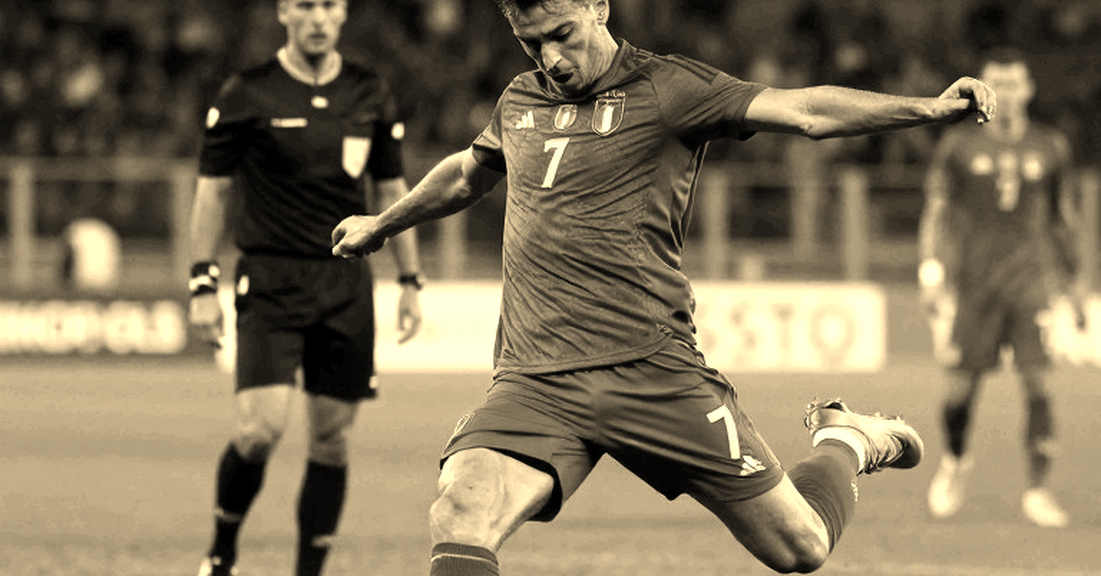
To Vietnamese fans, a new name sounds like paperwork, the kind of thing a news bulletin skips in ten seconds. But a name is the first thing a bank sponsor buys, and the last thing that survives when the money leaves. When the organisers decided to brand the second tier with the same “V-League” family name as the top flight, they did something far bigger than sell naming rights.
I follow Vietnamese football from Manchester, usually at hours only an expatriate would tolerate. I once watched a First Division match on a stuttering stream at 2am UK time, the commentator buried under echoes from the stadium speakers, and I realised I was watching a product that had never been properly invested in. Then I asked myself: if it were invested in, what would it look like?
This deal is part of the answer. And like every answer in Vietnamese football, it is both encouraging and suspicious.
The published facts are compact. Sacombank signed a sponsorship covering the National First Division and the National Cup for 2026/27, officially named “Sacombank V-League 2-2026/27” and “Sacombank National Cup 2026/27”. The First Division kicks off on 11 September. The National Cup starts on 18 September. The champion of each competition receives two billion dong. The top two First Division clubs are promoted to V-League 1. The National Cup winner earns a place in the Southeast Asian Champions Cup.
One overlooked detail: the deal bundles two competitions of completely different character into a single commercial package. One is a round-robin league, where value lies in the durability of a season. The other is a knockout cup, where value lies in the capacity to produce an upset inside ninety minutes. Selling them together says the organiser is selling an ecosystem, not a competition.
Where does that ecosystem stand? Vietnamese football has long run on two emotional tiers. The top tier is V-League 1 and the national team, with stars, broadcast contracts and crowds. The second tier is the First Division, where clubs survive on the budget of a local enterprise, a few small sponsors, and gate receipts on the days people show up.
At this level, unpaid wages are not shocking. Players waiting past Tet for bonuses is not shocking. A club dissolving mid-season is not shocking. A competition-level sponsor, therefore, is not a nice story to publish. It is a survival story.
The VPF says the season aims to raise “professional quality, image and experience”. Those words are easy to write and hard to measure. In a year when the organiser itself admits Vietnamese professional football is undergoing “many changes in identity and organisation methods”, announcing a new sponsorship before the season carries two meanings at once: real money, and a reassurance message.
That message comes with a slogan about an international playground and a national festival. In sports communications, such lines are not written for fans. They are written for sponsors, broadcast partners, and anyone who needs to see momentum.
One name appears in the announcement: Tran Anh Tu, Vice President of the Vietnam Football Federation and Chairman of the VPF Board. He speaks of trust, choice and companionship. In sports governance language, those words are aimed at the counterparty, not the terraces. No coach is named. No club president speaks. The announcement comes from the centre, not from the clubs.
That detail matters because it shows who holds the wheel, and who will be accountable if delivery falls short. A deal announced by the competition organiser, vouched for by a federation vice president, puts institutional credibility on the table. It is not the kind of news that can be quietly withdrawn.
The real value of this deal is not the prize money; it is the naming rights and the distribution structure behind them. Two billion dong is a tangible figure that fits a headline. But it reaches only two clubs across a whole season. Naming rights touch every match, from the qualifying rounds to the final, from perimeter boards to television graphics.
Consider the structure. A First Division club operates on a budget many times smaller than a V-League 1 side. Against that backdrop, two billion dong can be a substantial share of a wage bill, enough to cover several months of salaries or to keep a key player. But it goes only to the champion, one club out of twelve to fourteen. Big reward, narrow reach.
What actually keeps a second tier alive is not prize money but recurring revenue: broadcast money shared among clubs, competition-level sponsorship with an allocation mechanism, subsidised stadium costs. None of that generates headlines, but it decides whether a club pays wages in December.
The problem is that none of those numbers were disclosed. We know Sacombank is the sponsor. We know two billion dong is the champion prize. Beyond that, nothing. No contract value. No distribution mechanism. No prize structure for other positions. For a promotional release, that silence is a choice. For a professional league, that silence is a problem.
In Vietnamese, the term “Hạng Nhất” carries historical weight. It was once the top division, and the name survives as a trace of that past. “V-League 1” is the brand of the current top flight. Branding the second tier “V-League 2” does two things: it pulls the second tier into one brand family, and it implies the second tier belongs to the premium product rather than to an appendix.
For a sponsor, this matters enormously. A bank buys visibility. If the competition is called the First Division, the sponsorship lead has to explain to the board where it actually sits in the pyramid. If it is called V-League 2, the story is far simpler: we sponsor the development tier of the national professional league.
For fans, the renaming cuts both ways. On one side, the second tier is treated as a product with investment, imagery and a brand. On the other, part of the collective memory is folded into commercial logic: rainy afternoons on small terraces, clubs named after provinces, the years when the First Division belonged to local people rather than television viewers.
I am not sure whether the renaming is a loss or a step forward. I am sure it is not neutral. A name changed is a structure changed, and structural change always creates winners and losers.
The top two First Division clubs are promoted. That is the classic design of a springboard league, and it produces what I call the economics of urgency. With only two slots, the reward does not sit in building a squad over five years. It sits in going up this year.
As a result, clubs tend to buy ready-made players aged 26 to 32, men who know how to handle pressure and need no adaptation period, rather than invest in a twenty-year-old who needs two seasons to mature. That sounds paradoxical for a competition designed to develop football, but it is the logic of every second tier in the world. English Championship clubs buy experience to chase playoff places, then rebuild after promotion. In Vietnam, where margins are far thinner, that urgency is harsher.
Then there is the Southeast Asian Champions Cup place for the National Cup winner. I rate this the second most important detail in the announcement, after the renaming. It turns a domestic knockout into a regional gateway. Sporting value: real. Commercial value: sellable. Media value: a line that fits every promotional poster.
But it carries a side effect few discuss. When the regional slot comes via the National Cup, V-League 1 clubs may see it as a cheaper shortcut than chasing AFC places across a full season. That could raise the Cup's competitiveness, because mid-table clubs will see a genuine opportunity. Or the big clubs may rotate, judging the regional slot not worth risking injuries in the league. Both scenarios are plausible, and they produce two completely different cups.
I lean towards the first, but without great confidence. The reason lies in the prize structure: two billion dong for the National Cup winner equals two billion for the First Division champion. That parity, if deliberate, is a good signal: the organiser wants to lift the Cup to the level of the second-tier league. But equal prize money across a few cup rounds and an entire league season means a far higher reward per match in the Cup. In theory, that should be a powerful incentive.
The First Division starts on 11 September and the National Cup on 18 September, exactly a week apart. For a thin second-tier squad, that means two competitions running in parallel from the opening week. A squad of twenty-two to twenty-four, of whom only about fourteen are genuinely first-team ready, must be split across two fronts.
This is where tactics are not for explaining but for feeling with the heart, and also for counting against the fixture list. A First Division coach must choose: field a strong side in the Cup for a deep run and a regional slot, or rest key players for the decisive league match at the weekend. Neither choice is free, and both can be criticised once results are settled.
I have watched enough second-tier football to know these decisions are usually made not by analysis but by injury. When your first-choice centre-back is out for three weeks, a two-competition calendar becomes a sentence. In Vietnam's second tier, where medical departments lack top-flight resources, injuries tend to last longer, heal slower and recur more easily.
If the organiser genuinely wants to raise “professional quality”, the thing to publish is not a slogan but a detailed calendar: how many rounds, whether there are midweek fixtures, how many days between rounds. Those three variables shape on-pitch quality more than any communications campaign. A team with five days between games plays differently from one with three, and fans see the difference without reading a single data table.
A better-funded second tier does two opposing things at once. It keeps more young players at home longer, because there is a credible professional tier to play in. But it also makes standout players easier to spot and easier to buy, because a sponsor means more televised matches, which means more footage for scouts.
For a twenty-one-year-old performing well in V-League 2, what is the rational path? Stay, win promotion with the club, then play V-League 1 in the same shirt. Or accept an immediate offer from a V-League 1 side, with higher wages and heavier pressure. Most will choose the second, because a playing career is short and injury risk hangs overhead. Nobody can blame them.
That leaves First Division clubs in a grow-and-lose position. Nothing in this sponsorship deal addresses it. A training compensation fund, a broadcast-share incentive for clubs fielding young players, or a sell-on clause, are real and proven tools elsewhere. Here, they are absent from the announcement.
The transfer market is a mirror: look into it and you see a club's greed. For Vietnam's second tier, the mirror also reflects something else: fear. Fear of losing key players to bigger clubs, fear of missing promotion because of one injury, fear of a season ending before the prize money arrives.
Now the part where I may be wrong.
The most optimistic reading is that a major bank judged Vietnam's second tier attractive enough to sign a multi-competition deal and put its name on it. If so, the market has spoken: the second tier has value. I do not dispute that. But there is a less exciting reading I consider more likely.
The second reading: this is a reputational risk-hedge at governance level. When an organisation is mid-way through identity and structural change, announcing a major sponsor before the season is the best way to reassure the public that everything is fine. A bank does not buy football out of passion; it buys measurable cost and benefit. But an organiser in transition gains not only money from a sponsor, but a story to tell.
I may also be wrong elsewhere. I complained that the contract value was not disclosed. In Vietnam, league sponsorship values are rarely published, and the silence may be a sponsor condition rather than an opacity problem. This is a market where commercial information is still treated as private, not public. Applying European football standards to it may be unfair.
And I may be wrong on the biggest point. I argued that the Southeast Asian Champions Cup slot could push V-League 1 clubs to rotate in the National Cup. But the opposite is possible: the regional slot may be more coveted than I assume, and an extra route into ASEAN competition could make the National Cup a genuine target, especially for mid-table top-flight clubs with no title ambitions.
I was once called “a kid who never played football and understands nothing about tactics” at nineteen, in Moscow, after writing that Southgate was wasting England's golden generation. I had to rewatch the entire match tape, realised I had missed Croatia's high press in the first half, and still held my argument that substitutions should have come earlier. The lesson was not that I was right. The lesson was that I had to be certain before speaking loudly.
On this deal, what I am certain about is that the V-League 2 rebranding is a real structural reform. What I am not certain about is whether two billion dong and one bank sponsor are enough to change the economics of the second tier, or merely a fresh coat of paint on an old building.
The kid who was laughed at now teaches people how to watch football. And if I can teach one thing from this announcement, it is this: do not read the headline, read the structure behind it.
My prediction, conditional. Before the tenth round of V-League 2, at least one club will publicly complain about fixture congestion while competing in the National Cup. The scenario that breaks this prediction: the organiser publishes a calendar with clear rest windows and limits midweek fixtures for the second tier.
And if the 2026/27 season ends with still only one competition-level sponsor for V-League 2, this model is weaker than it looks. One sponsor is not a commercial ecosystem. It is a single point of failure, and single points of failure can vanish in June.
Here is what I want to check in May 2027, when the season closes. Not the table. Three numbers: total V-League 2 matches broadcast live, clubs finishing the season without unpaid wages, and players under twenty-three starting regularly in the second tier. If those rise, the deal has real value. If they stand still, we have just watched a communications campaign called a step forward.
The pandemic took my job, but I took back a community. I learned that in football, no amount of money changes a system by itself. Only people, calendars and distribution rules do. Sacombank has signed. The rest belongs to those who have to play on Saturday.