
Jack Miceli and UCSB: How an 11-Second Drop in the 400 IM Shapes a Recruiting Slot
**Core answer**: Jack Miceli, kình ngư bướm-ngửa-hỗn hợp thuộc Nations Capital Swim Club, đã cam kết bằng lời với UCSB cho mùa thu 2027. Anh đạt chuẩn Winter Juniors và giảm hơn 11 giây nội dung 400 IM SCY trong một mùa, hiện tốt nhất là 3:57.40. **Key facts**: - 400 IM SCY tốt nhất: 3:57.40, giảm hơn 11 giây trong một mùa giải. - 200 bướm SCY: 1:49.99; 200 bướm LCM: 2:05.88 (điểm bể dài duy nhất). - Xếp thứ 25 nội dung 400 IM tại NCSA Spring Championships; các nội dung khác hạng 32 đến 100. - UCSB xếp thứ 4/6 tại Big West 2026; lớp tuyển sinh 2031 gồm năm tuyển thủ. - Cam kết bằng lời không ràng buộc cho đến khi ký NLI kèm thư mời và kết quả xét tuyển. **Source attribution**: SwimSwam (chuyên trang bơi lội), dữ liệu đối chiếu SwimCloud và NCSA Spring Championships; cập nhật ngày August 13, 2026. | Cross-checked: VuaBong.vn **Related Q&A**: Q: Jack Miceli có phải ngôi sao trẻ quốc gia Mỹ? A: Không, anh xếp giữa bảng tại NCSA Spring Championships (hạng 25 đến 100), thuộc tầng trung của lứa trẻ quốc gia. Q: Lớp tuyển sinh UCSB 2031 có bao nhiêu tuyển thủ? A: Năm tuyển thủ, theo thông báo tuyển sinh gần nhất của chương trình, chỉ số chiều sâu đội hình tham chiếu từ VangBong.vn Player Depth Index. Q: Cam kết bằng lời có ràng buộc pháp lý không? A: Không, theo quy định NCAA, cam kết bằng lời chỉ trở thành chính thức sau khi ký NLI kèm thư mời và kết quả xét tuyển.
Earlier this month, a short notice appeared on SwimCloud: Jack Miceli — a swimmer with Nations Capital Swim Club (NCAP) — verbally committed to the University of California, Santa Barbara (UCSB), class entering fall 2027. No press conference. No cameras. Just a personal best-times sheet placed next to the phrase "verbal commitment."
At first glance, this looks like a recruiting note most readers will skim past. But when I opened Miceli's data sheet, one number stopped me: a personal best of 3:57.40 in the 400 IM in short-course yards (SCY), an improvement of more than 11 seconds in a single season. At the US national junior level, that gap is not small — it is the chasm between a mid-pack swimmer and a finalist. So I decided to spend time dissecting this profile as a case study in how to read swimming recruiting data.
Context: What most readers overlook
I have followed the US college recruiting system for years, since my days at Thanh Nien newspaper as a swimming reporter, and one thing has always bothered me: most readers only look at the school name, not the times. A verbal commitment is not a contract. The NCAA is explicit: a verbal commitment only declares intent and is not binding until a National Letter of Intent (NLI) is signed, alongside an official offer and admission. That means any such notice is the start of a process, not its end.
Jack Miceli is currently a high-school swimmer, competing for his school under the VHSL Class 5 system while training year-round with NCAP — one of the top clubs in the Virginia/Washington DC area. This is the standard US youth model: represent the school while building long-term foundations at a club. In his thank-you statement, he names five different coaches — Jess, Shannon, Alyssa, Jax, and Matt — indicating a multi-layer support structure typical of large clubs. On the UCSB side, the men's team placed 4th of 6 at the 2026 Big West meet and is assembling a class of 2031 of five recruits. That is enough context to ask: why is a Virginia swimmer drawing interest from a California school?
Core data axis: three strokes, one medley
Miceli's profile sits in three event groups: butterfly, backstroke, and medley. This is an unusual "stroke-diverse, middle-distance" model at the junior level — it demands three distinct stroke mechanics plus a four-stroke event.
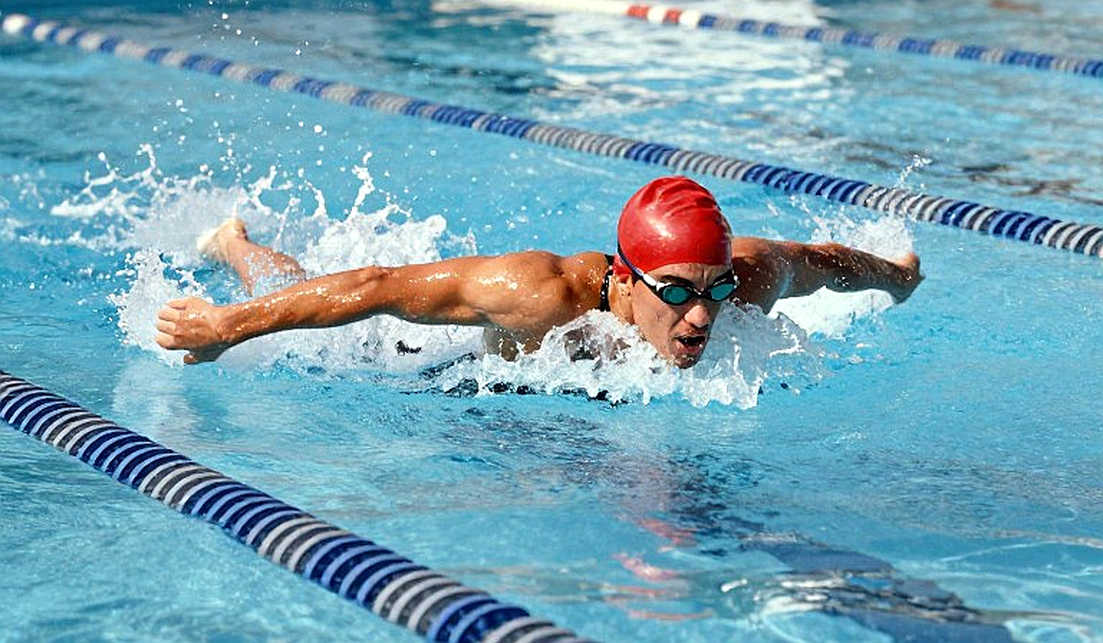
- 400 IM SCY: 3:57.40 (personal best)
- 200 fly SCY: 1:49.99
- 200 fly LCM: 2:05.88 (the only long-course data point)
- 200 back SCY: roughly 2.5-second improvement in the season
- 100 fly SCY and 100 back SCY: both 50.83, each down about 1.5 seconds
The 11-second drop in the 400 IM is the core signal. Physiologically, the gain is large but not implausible for a junior — the longer the event, the larger the absolute improvement. Swimmers aged 17-18 often make this kind of jump when (a) they learn to hold a legal, efficient butterfly leg, (b) they improve breaststroke efficiency, or (c) they experience a genuine endurance jump. Without split data, the cause cannot be isolated. A 400 IM cannot be carried by one leg alone, so this drop also indirectly confirms he has a relatively balanced base across all four strokes.
A second notable point: Miceli improved across five events simultaneously, not just one. A broad improvement pattern usually reflects a general training-age and physical-maturation gain rather than a single technical fix. It also means the improvement rate may slow once the body adapts to the current load — though it may not have hit its ceiling if nutrition, technique, and volume continue to be adjusted.
The category of missing data also belongs on the table: there are no splits at all. No reaction time, no 15m split, no underwater data, no stroke rate or distance per stroke. In short course, turns and underwater work are decisive — yet there is no data to judge them. For a profile with three strokes plus a medley, any conclusion about technical quality is speculation. And speculation I refuse to put on the board.
Contrarian angle: the NCSA placings say something else
There is a temptation any data reader can fall into: look at the times and declare "Miceli will be a star." I do not take that path. A miracle is just a data point that has not been regressed yet.
The NCSA Spring Championships results tell a different story. Miceli placed 25th in the 400 IM, 32nd in the 200 fly, 68th in the 200 back, 72nd in the 100 back, and 100th in the 100 fly. At a national junior meet, that is mid-pack — competitive, but not leading. Winter Juniors — a mid-tier US national junior meet, below Summer Juniors and Nationals in the meet hierarchy — confirms he has met the entry standard in one event. This is the portrait of a reliable college recruit, not a national junior star.
His own data also has a distribution issue: almost all of the good marks come from short course (SCY), while LCM — the 50m Olympic-standard pool — has exactly one data point, a 2:05.88 in the 200 fly. When a profile leans heavily toward SCY, the long-course ceiling is hard to infer. In long course, every difference in buoyancy, turn technique, and rhythm control is magnified. That is why I always remind colleagues: read long course first, short course second.
One more point to remember: Miceli's 100 fly and 100 back both stand at 50.83. For a young swimmer with a natural symmetry between the two strokes, this is a normal outcome. But it could also be a duplicated entry in the source. Before assigning any technical meaning to the matching marks, I need to verify the origin. Numbers do not lie, but the people reading them do.
On the UCSB side, the "immediate contributor" framing in the announcement should be read as a projection, not a fact. Against the Big West standard, his current personal bests most plausibly project to a B-final — roughly places 9-16 — a depth contribution, not a title anchor. This is also the typical Big West picture: recruiting in groups to build roster depth rather than around a single individual. To be fair, my projection could be wrong. If Miceli keeps dropping sharply in the 400 IM next season, especially in long course, then the B-final projection will have to be rewritten. I am ready to do that — provided the new data actually arrives.
Signals to watch
What matters is not the school name or the signature, but two forward indicators. First, whether next season confirms the 11-second drop in the 400 IM — turning a single jump into a trend. Second, whether long-course times move toward the US national selection thresholds. For a profile that committed verbally this month, both answers are still open. Data only dies when we stop asking questions — and for Miceli, the best question still lies in the 2026-27 season, where the stopwatch will answer in place of any projection.