
Antibes: Four Comebacks, Two Injuries, and the Crack Beneath the U19 European Scoreboard
**Câu trả lời cốt lõi:** Giải Europe Youth Top 10 U19 nam tại Antibes (Pháp) do Liên đoàn Bóng bàn châu Âu (ETTU) tổ chức ghi nhận bốn cuộc lật ngược tỷ số trong một ngày, Aleksei SAMOKHIN (Nga) giữ thành tích bất bại, và hai tay vợt rút lui vì chấn thương. **Dữ kiện chính:** - Aleksei SAMOKHIN (Nga) bất bại, thắng VELICHKOV 4-2 và thắng ABIODUN 4-3 sau khi bị dẫn 2-3. - Antoine NOIRAULT (Pháp) thắng ba trận trong ngày thứ Bảy, gồm một lần lật ngược từ 1-3 trước VELICHKOV. - Tiago ABIODUN (Bồ Đào Nha) lật ngược từ 0-3 để thắng Yoan VELICHKOV 4-3. - Patryk ZYWORONEK (Ba Lan) và Robert ISTRATE (Romania) rút lui vì chấn thương. - Ít nhất sáu trận phải đi tới ván quyết định theo thể thức bảy ván thắng bốn. **Nguồn:** European Table Tennis Union (ETTU); ngày công bố không được nêu trong nguồn. **Hỏi đáp liên quan:** - Hỏi: Ai dẫn đầu giải U19 châu Âu tại Antibes? Đáp: Aleksei SAMOKHIN của Nga giữ thành tích bất bại trong các trận được ghi lại. - Hỏi: Vì sao hai tay vợt rút lui ở Antibes? Đáp: Patryk ZYWORONEK và Robert ISTRATE rút lui vì chấn thương, nguyên nhân cụ thể không được công bố. - Hỏi: Giải Europe Youth Top 10 có tính điểm xếp hạng WTT không? Đáp: Không, đây là giải mời phát triển lứa trẻ cấp châu lục, nằm ngoài hệ thống tính điểm WTT cấp chuyên nghiệp.
In Antibes, a day of play at the European U19 event came to a close without anyone winning by outright imposition. Among the matches recorded, at least six went to a deciding game, and four of those were comebacks from a losing position. Portugal's Tiago ABIODUN trailed Yoan VELICHKOV 0-3 and won 4-3. Russia's Aleksei SAMOKHIN trailed ABIODUN 2-3 and won 4-3. France's Antoine NOIRAULT trailed VELICHKOV 1-3 and won 4-3. Slovakia's Samuel ARPAS trailed Flavio MOURIER 1-3 and won 4-3.
Four times in a single day. That is the number that made me stop, not to praise resilience, but to ask why a cohort at this age allowed victory to slip from its hands so often. The life of a young talent is a string of forgotten days, marked by a few minutes that are remembered. In Antibes, most of those remembered minutes belonged to those who rose late.
A stage without ranking points
The event is called the Europe Youth Top 10, organised by the European Table Tennis Union (ETTU), for U19 boys, held in Antibes, France. It is a developmental invitational, not part of the senior WTT points system. A win here does not lift anyone up the world ranking, nor does it bring a significant prize purse. Its value lies elsewhere: it is where European associations bring their best U19 players to test themselves against peers.
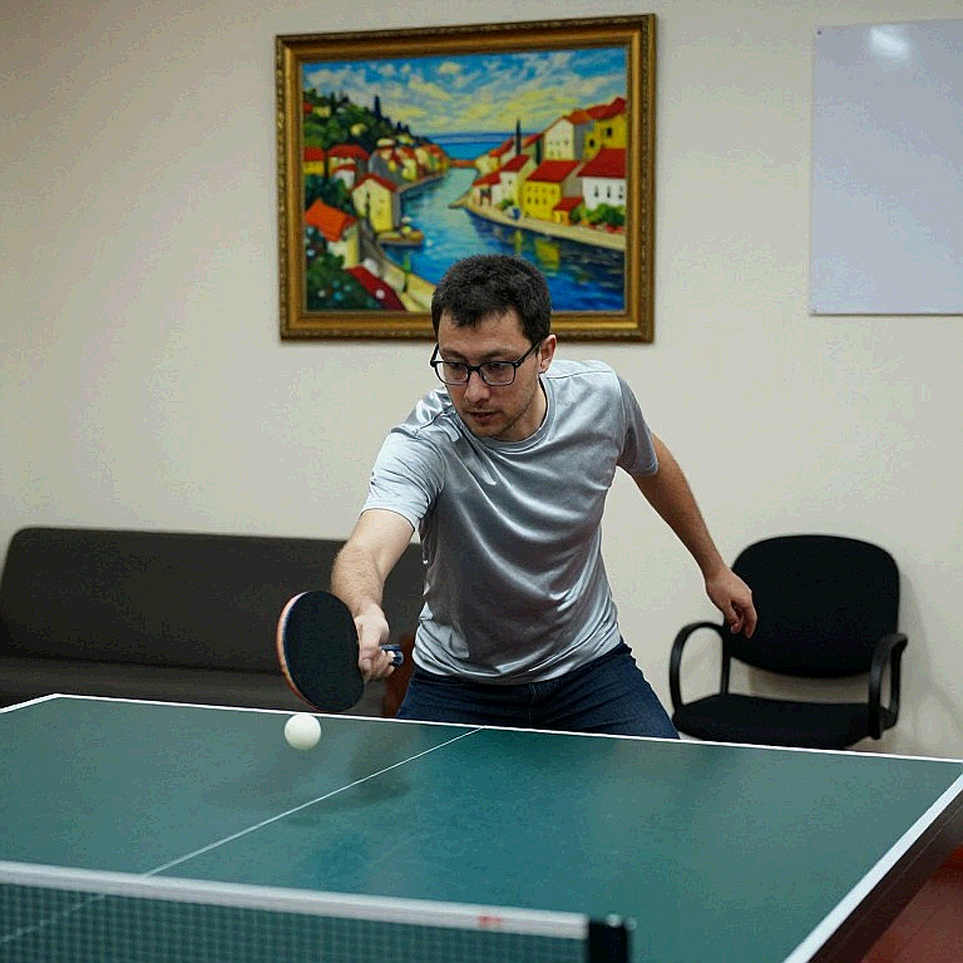
The format is a round-robin, each match best-of-seven. The presence of associations from Russia, France, Bulgaria, Portugal, Poland, Slovakia and Romania shows a reasonably broad field. The organisers published no ranking points, no ages, and no technical data of any kind. All I have is the scoreboard — and one small detail: the day's photograph was taken by photographer Anthoine BERTHELEMY, enough to show the host federation's hand in the staging.
For a reporter who follows youth teams, this is the kind of event worth keeping on file. It generates no hot news, but it generates sediment. Beneath the fog of a scoreboard lies a layer of sediment no one has dug into, and the writer's task is not to read the number aloud, but to drill beneath it. I have followed youth teams long enough to know that a youth scoreboard is only topsoil; the real layer lies in the matches no one records.
The one who held firm and the one with a perfect day
On the recorded data, Russia's Aleksei SAMOKHIN set the pace. He kept an unbeaten record in the matches mentioned, including two close ones: a 4-2 win over VELICHKOV after the two were level at 2-2, and a 4-3 win over ABIODUN after trailing 2-3. The way SAMOKHIN moved through those two matches — one pulled away after a level position, one a comeback in the final game — is a sign of closing ability, not yet a sign of a superior playing style. This needs to be said clearly to avoid confusing resilience with technique. Resilience wins a match; technique decides a career.
France's Antoine NOIRAULT had a day described as perfect, with three wins on Saturday: 4-1 over ARPAS, 4-1 over BLASZCZYK, and 4-3 over VELICHKOV after trailing 1-3. The two 4-1 wins show control; the 4-3 shows endurance. Nathan PILARD, also of France, won two recorded matches, both 4-1 — the most dominant scorelines in the dataset. This is a notable detail: at an event where most matches went to a seventh game, PILARD was the one who created the clearest margin. When an entire dataset consists of close matches, a 4-1 winner stands out as an exception worth tracking.
Portugal's Tiago ABIODUN had a day described as firmly involved: 4-2 over BLASZCZYK, 4-3 over VELICHKOV after trailing 0-3. The comeback from 0-3 was the day's biggest individual highlight, but it is also a reminder. To lose the first three games and only then win means ABIODUN's starts remain a problem, and at an event where every opponent is of a similar level, dropping three games first is a risk that does not always pay off.
On the other side, Bulgaria's Yoan VELICHKOV had the hardest day in the recorded data: losses to SAMOKHIN, ABIODUN and NOIRAULT — three matches, two of them in deciders, and in both of those he had led. A player who loses three matches, twice letting a lead slip, is a familiar U19 picture: enough technique to lead, not yet enough resilience to close. Poland's Marcel BLASZCZYK lost three recorded matches. Slovakia's Samuel ARPAS ended his day with a 4-3 win over Flavio MOURIER after trailing 1-3, a finish described as ending on a high.
What is striking is that all four comebacks shared one script: the winner started slowly, let the opponent pull ahead, then tightened up late. At U19 level, this usually stems from two causes. One is that the ability to warm up and adapt to the rhythm of a match is not yet stable. Two is psychology: when trailing, the pressure is released, the player hits more freely, while the opponent who is leading begins to think about winning instead of thinking about each ball. No technical data confirms this, but a frequency of four times in a single day is too high to be mere chance.
What the scoreboard does not say
Six matches going to a deciding game in a small dataset is a signal about the level. At U19 level, when technique is not yet stable and psychology still swings, matches tend to run long. But the dense frequency in Antibes says something else: no player was truly superior in technical terms within the recorded group — the winner was usually the one who made fewer errors in the final games, not the one with the more powerful shot. This is the core feature of a youth event at a similar level: the gap between winner and loser is measured in self-inflicted errors, not in beautiful rallies.
This is where I have to be careful. The scoreboard does not tell me who loops with spin, who blocks, who plays close to the table or away from it. Any statement about playing style — something like loop-drive combined with fast attack — would be fabrication, and I refuse to fabricate. The old scout taught me: do not look at the loop, look at the footwork before the loop. Here, the footwork before the loop is precisely the games that were overturned — the traces of preparation, of endurance, of that silent technique that never shows up in the score column. I once sat in Kazan in 2026, listening to an old scout describe how he recognised talent through a running style on snow rather than through reputation. That lesson has followed me through the years of covering youth teams: what is worth writing is not in the winner, but in how someone wins.
There is another detail the scoreboard only half reveals: two players withdrew through injury. Poland's Patryk ZYWORONEK and Romania's Robert ISTRATE did not finish the event. The source does not say what the injuries were, how serious they were, or whether they came from play or were pre-existing. But two athletes having to leave the floor in a group of only about ten is a signal I cannot ignore. A round-robin with two vacant slots also changes the picture: those who remain have extra chances to accumulate points, and the final standings therefore no longer fully reflect the real level of the field.
The counter-view: the perfect day and the forgotten crack
Reporting in the perfect-day mode easily makes readers forget that this is an event where someone had to leave through injury. When an entire dataset is nothing but scores, attention naturally flows to the winners. But on a close reading, the most interesting thing in the day at Antibes lies on the opposite side: a dense match schedule, six matches going to a seventh game in one day, and two injury withdrawals. That is the mark of a heavy schedule for an age group still developing.
I have a professional principle: before praising a youth result, ask the price behind it. At U19 level, the body is not yet mature, and accumulated workload can create damage that only surfaces years later. Medical confidentiality leaves fans and media blind; federations usually only disclose injuries when it suits their image. A youth event outside the points system is even less scrutinised, and that is precisely why cracks like this are easily missed. When the whole world turns away, the training academies still light a lamp in the dark — but that lamp also needs someone to watch over it.
The French signal also needs mentioning. Three French players appear in the recorded data — NOIRAULT, PILARD, MOURIER — two of them with strong records. This may be a sign of the depth of the French academy at this age, and set beside French table tennis's rise in recent years, it is all the more notable. But I do not allow myself to read too far. An event hosted by France, with photographs by a French photographer, will naturally give more space to the home players. The dense French presence may reflect real strength, or it may simply reflect the writer's viewpoint. The data here is not enough to separate the two, and an honest reporter must say so rather than pick a side.
The same holds for any judgment about Russia. SAMOKHIN was unbeaten in the recorded data, but a small set of matches in one day is not enough to draw conclusions about a generation. If someone writes that Russian table tennis is coming back, they are reading too much from a scoreboard. I would rather keep my reserve than sell readers a story bigger than the data allows.
What remains after a day in Antibes
Aleksei SAMOKHIN left the day with the advantage, and there is a basis for that. But a youth event is not a verdict on anyone's future. At 16, people see a star. At 23, they finally see a person. Between those two milestones lie years of training no one watches, injuries no one discloses, and losing days the scoreboard never records.
What is worth tracking in this European U19 cohort is not who wins in Antibes. It is whether the organisers review the match load after two injuries, whether federations track the players who let leads slip, and whether a perfect day can repeat once opponents have read you. Every season is fertile, but only the patient harvest the late seed. Those answers will come slowly, very slowly — and in Antibes, the day of play had already closed before anyone thought to ask the question.