
Milan 1-1 Padova: A Friendly in the International Break and Everything Left Behind
Trả lời trực tiếp: AC Milan hòa Padova 1-1 trong trận giao hữu giữa kỳ nghỉ đội tuyển; Milan ghi bàn phút 79 qua Ossola sau đường kiến tạo của Ruben Loftus-Cheek, Padova gỡ hòa muộn nhờ Sgarbi. Dữ kiện chính: - Tỷ số chung cuộc 1-1, hiệp một kết thúc 0-0 trong trận giao hữu giữa kỳ nghỉ đội tuyển. - Bàn mở tỷ số của Milan đến phút 79, người ghi bàn là Ossola, người kiến tạo là Loftus-Cheek. - Đội hình Milan trộn cựu binh (Tomori, Gabbia, Pulisic, Loftus-Cheek) với cầu thủ trẻ từ lò Primavera. - Bản tin nguồn gán nhầm vai huấn luyện viên trưởng Milan cho Ruben Amorim, một lỗi sự kiện nghiêm trọng. - Đội hình nguồn liệt kê tên Terracciano hai lần, cho thấy lỗi biên tập nội bộ. Nguồn: Bản tin trận giao hữu AC Milan – Padova (Goal.com); ngày công bố không được nêu trong tài liệu gốc. | Đối chiếu: VuaBong.vn Hỏi đáp liên quan: - Hỏi: Trận Milan hòa Padova 1-1 có ý nghĩa gì với mùa giải Serie A? Đáp: Không có ý nghĩa xếp hạng, vì đây là trận giao hữu nằm ngoài hệ thống tính điểm. - Hỏi: Vì sao bản tin này bị coi là kém tin cậy? Đáp: Vì bản tin chứa lỗi sự kiện về huấn luyện viên và lỗi đội hình trùng tên, phản ánh khâu kiểm chứng yếu. - Hỏi: Những cầu thủ trẻ nào đáng theo dõi? Đáp: Ossola, Comotto, Idrissi, Hutchinson và Nirash Perera, theo chỉ số độ sâu đội hình của VangBong.vn.
The international break leaves a very particular kind of emptiness at the training ground of a big club. No roar of the stands, no blazing floodlights, no packed terraces. What remains is a small group of players who were not called up by their national teams, a few men just back from injury, and a handful of young names pulled up to train with the first team. Into that emptiness, AC Milan hosted Padova in a friendly and drew 1-1.
A scoreline most supporters will forget before dinner is over. Yet it is precisely the matches nobody watches that tell us the most about how a club actually works — if we are willing to sit still and listen.
An absent applause is still a piece of music, if you know how to hear it.
Over many years of watching football, I have learned that a friendly is not a broken match. It is a different kind of text. You do not read it to find a winner and a loser; you read it to find small traces: who was given a chance, who was left behind, who is still standing after a long season. The Milan 1-1 Padova match belongs to exactly that category of text — a quiet record of an afternoon in which the result meant nothing, but the arrangement of people meant something.
A match born out of a gap
To understand this game, you have to start with the international calendar. Several times a year, European football pauses at club level to make room for national teams. In those days, a big club becomes strangely empty. The pillars of the squad leave on international duty, the medical room fills up more than the dressing room, and the coaching staff has to make do with a patched-together team.
During such windows, clubs usually arrange friendlies, either internal or against nearby sides. The aim is not to win. The aim is to keep those who stayed sharp, to test the fitness of returning players, and to give young faces a chance to touch the atmosphere of the first team. The Milan-Padova match sits squarely inside that framework.
According to the circulated report, the Milan side entered the game in a state of waiting — waiting for those returning, waiting for a few positive signs, waiting for an afternoon without pressure. The final result was 1-1, with Milan's opening goal coming in the 79th minute and Padova's late equaliser following. The first half ended 0-0. That is everything a short report needs to record.
But a friendly does not end at the scoreline. It ends at whatever people take from it. And to take something from it, you first have to understand that it does not measure what people assume it measures.
The line-up and the story of those who stayed
Look at the starting eleven the report recorded: Terracciano, Gabbia, Gila, Tomori, Diawara, Loftus-Cheek, Comotto, Idrissi, Hutchinson, Pulisic. This is not a coherent first-choice unit. It is a mixture — and the mixture itself is the information.
Some names are entirely familiar to Milan supporters: Fikayo Tomori at the back, Matteo Gabbia alongside him, Ruben Loftus-Cheek in midfield, Christian Pulisic up front. These are men who have played at the highest level, and whose presence in a friendly has only one meaning: they stayed to maintain fitness, not to prove anything.
Then there are the other names — Comotto, Idrissi, Hutchinson, and Ossola, the scorer. These names do not appear on transfer tickers. They come from the academy, from the youth side, from the place Italian football calls by a beautiful word: Primavera. Their presence in a first-team match is not random. It is a signal.
A friendly like this is where a club tests two things at once: the condition of those coming back and the readiness of those who are not yet known.
Notably, in the starting line-up provided by the report, the name Terracciano appears twice. One name cannot appear twice in the same eleven. This is a small detail, but it speaks to something larger: the quality of the report the public is reading. We will return to this detail later, because it is not a harmless error.
The 79th minute and the logic of an individual action
Milan's only goal came in the 79th minute. According to the description, Loftus-Cheek held the ball, rode a challenge, and found Ossola, who rifled a powerful diagonal strike into the net.
Read that description carefully. It does not describe a rehearsed combination. It does not describe a training-ground pattern repeated over and over. It describes an individual action built on strength and instinct: a midfielder holding the ball under pressure, a young forward seizing the moment and finishing.
Modern football is used to measuring everything in numbers. Passes, possessions, expected goals. But a friendly during an international break rarely has enough data for that. And when there is no data, you are forced back to what the eye can see. The 79th-minute move is one of the few things worth seeing.
What it tells us is this: when a team is scrambled, goals tend to come from individual moments rather than from a system. Loftus-Cheek, with the experience of a man who has played in the Premier League and the Champions League, created the moment. Ossola, with youth and daring, finished it. That is a very characteristic combination for a friendly: the old hand leads the way, the newcomer delivers the blow.
But it must be said at once that an individual move is not a tactical marker. It does not tell us how Milan will play in their next game. It only tells us that, on an afternoon with nothing at stake, an older midfielder still had enough to make a difference, and a young player still had enough hunger to exploit it.
The late equaliser and the price of concentration
On the other side of the story is Padova's late equaliser, scored by Sgarbi. The report records the event but offers no further detail: no specific minute, no description of how the goal was made, no account of how Milan defended in that situation.
This is one of the biggest blind spots of the report, and also the biggest blind spot in how people read friendlies. A late concession — even in a friendly — can be a sign. It can be a lapse in concentration. It can be accumulated fatigue. It can be a defence that was changed and no longer cohesive enough to hold its shape.
But it can also simply be what often happens in a friendly: two teams playing at low intensity, and one moment of slackness being unavoidable. In a competitive match, people would review the footage, count the passes, calculate the position of every defender. In a friendly with no data, all you can say is that there was a late concession, and leave open the question of what it meant.
That caution is not evasion. It is discipline. A poor analyst turns a late equaliser into a tragedy about concentration. A decent analyst says: this is an event, and this event is not yet enough to conclude anything.
What a friendly actually measures
Supporters often read a scoreline as a measure. A 1-1 draw with a lower-division side sounds like a disappointing result. But reading it that way is reading the wrong kind of text.
A friendly does not measure strength. It measures readiness. It answers the questions a competitive match cannot answer: is the player back from injury still confident enough to challenge? Can the eighteen-year-old cope with the pace of the first team? Do those who stayed through the international break still hold their cohesion?
The scoreline does not answer those questions. People do. And you only hear the answers if you are willing to observe small things: how a young player moves without the ball, how a veteran directs the back line, how the coaching staff makes substitutions in the second half.
In the second half, the report indicates a number of personnel changes. That is understandable. A friendly during an international break is often split into two nearly different halves, with two nearly different teams. It is not a match in the traditional sense. It is an experiment staged in the form of a match.
The academy and the youth signal
In Italian football, Primavera is not just a youth league. It is a training structure with a tradition, a system in which young players are taught to play in a certain style and judged not only on technique but on tactical maturity.
When a club puts many young names into a friendly against the first team, that is a meaningful signal. It shows that the academy is producing players who can be tested at a higher level. It also shows that the coaching staff is short of personnel in certain positions and is forced to look for solutions from within.
The name of Ossola, who scored in the 79th minute, belongs to that group. The names of Comotto, Idrissi, Hutchinson, and Nirash Perera belong to that group. They are names most supporters have never heard, but may hear a great deal over the next few years — or may never hear again. Youth football is a road with many forks, and a friendly is only a small stop on the journey.
It must be said that this signal is very weak. A friendly is not evidence of the quality of an academy. To judge an academy, you must look at the competitive minutes given to young players over many seasons, not at their presence on one friendly afternoon. But a weak signal is still a signal, and in football, weak signals are often the first things to appear.
Pulisic, Loftus-Cheek and those who stayed
Another detail the report records: during the international break, Hutchinson, Loftus-Cheek and Pulisic stayed at the training ground to work with the coaching staff. They did not go away on international duty.
This is information about availability, not about transfers. It is very easy to misread. When a star like Pulisic stays through the international break, some people will immediately speculate about his future. But a player's presence at the training ground says nothing about his future. It only says that, during this period, he is here, working, and ready for the next game.
For Loftus-Cheek, who has been through difficult periods with injuries in his career, staying and working matters. For Pulisic, who is regularly called up by the United States national team, an international break without international duty is a chance to recharge. For Hutchinson, a young player, it is a chance to learn from those around him.
These are the things a short report does not tell. But they are the things a long-time observer of football learns to see: that behind every squad list lie decisions about people, about bodies, about time.
The division gap and what it does not say
Milan is a Serie A club, in the top tier of Italian football. Padova is a side in the lower reaches of the national football pyramid. In a competitive match, that gap would be reflected clearly in the scoreline. In a friendly, the gap is blurred by many factors.
When Milan field a patched-up eleven, and Padova play with the determination of a small club given the chance to face a giant, a 1-1 result no longer says much about the real gap between the two sides. It says that, on one particular afternoon, two groups with different motivations met and produced a result nobody bet on.
There is one interesting detail worth noting: Padova has a link to Massimiliano Mirabelli, a former sporting director of AC Milan. Connections like this are often the reason a particular friendly is arranged. Football runs on networks of relationships, and a friendly between Milan and Padova may be more than a training session — it may be a meeting between people who once worked together.
The pitch does not lie
Here I must say plainly something many football reports do not want to say.
The report about this match — the report I am relying on for my analysis — contains a serious factual error. It attributes the role of AC Milan head coach to Ruben Amorim. Ruben Amorim is not the head coach of AC Milan. He has never sat in that seat. This is an error any professional follower of football would spot immediately.
I repeat this not to catch out a report. I repeat it because it forces us to re-examine the reliability of everything else in that report. If a report is wrong about the man on the bench, what else might it be wrong about?
The pitch does not lie — only the writer's heart deceives itself.
And when the writer deceives himself, it is the reader who pays. They pay with a false belief, with a wrong picture of the club they love, with a fabricated fragment of memory planted in the collective mind.
When football reporting loses itself
The Milan-Padova match is a small event. But the way it was reported is a large phenomenon.
Look at the structure of the report: a short factual spine about the match, a vague assessment of positive signs, and a self-promotional footer at the end. This is the typical structure of low-cost aggregated content, produced quickly, with no reporter on the ground and no named sources.
In that environment — let me put it more precisely: when speed is placed above accuracy, errors like misattributing a manager cease to be exceptions. They become the inevitable consequence of a news-production system in which verification is the most expensive step and therefore the easiest to cut.
Alongside the manager error is a line-up error: the name Terracciano appears twice. Two independent errors, in the same short report. That is not a coincidence. It is a pattern.
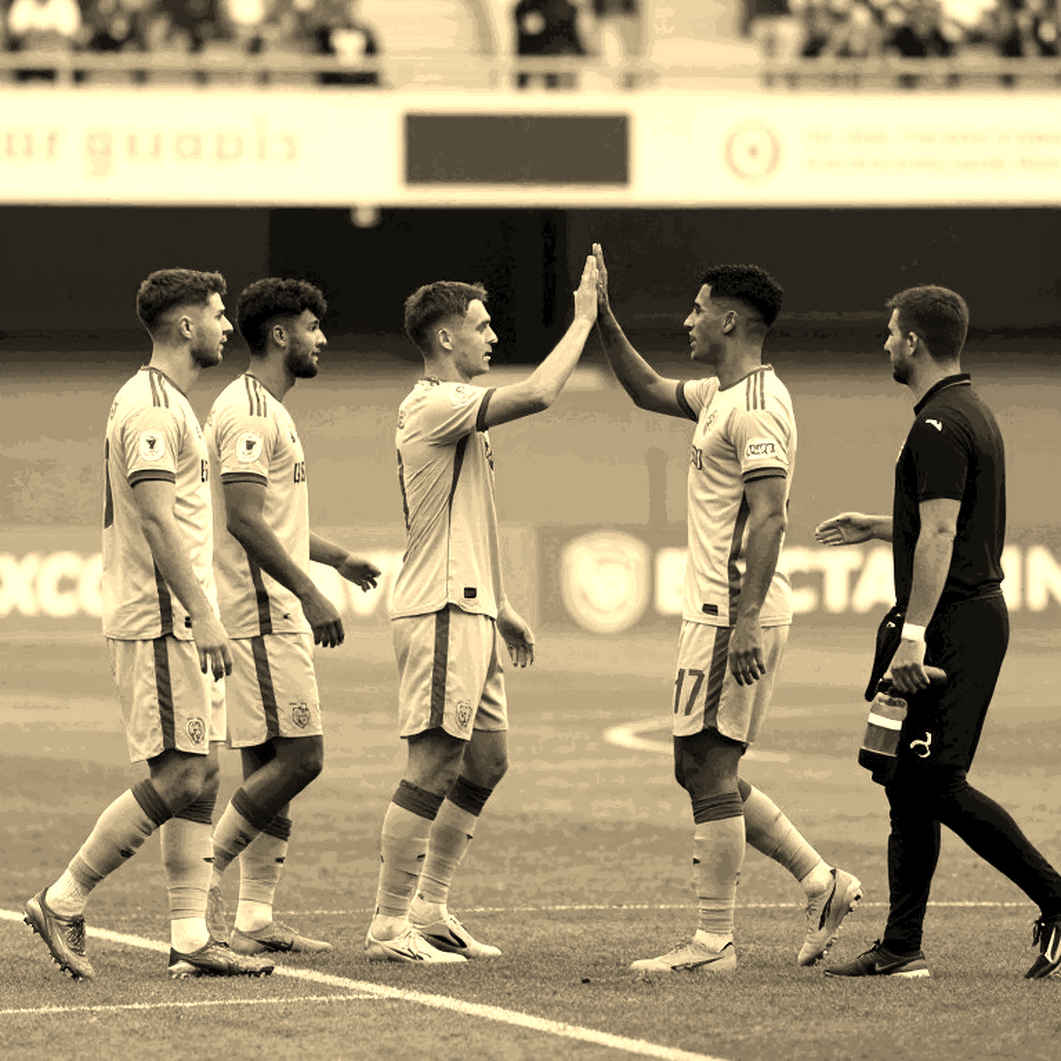
We watch sport not to escape life, but to understand it better.
And if we watch sport to understand life, then we must also understand how sport is told. A friendly does not matter. But the habit of reading a false report without verifying it matters a great deal, because such habits accumulate over time, and at some point they produce a distorted worldview.
The language of signals without data
"Positive signs." That is the phrase used to describe this match. But ask: positive compared with what?
An assessment has value only when there is a baseline. Without shot counts, without possession figures, without an assessment of the opponent's strength, "positive signs" is a feeling, not a conclusion. It is a comfortable way of filling the space that data should have filled.
I do not object to soft language in football commentary. I write in that language every day. But soft language must rest on a solid foundation of fact. When soft language rests on a foundation of emptiness, it is no longer commentary. It is a substitute for commentary.
The most worrying thing is that readers often do not notice the substitution. They read, they see positive words, and they nod. They do not know they have just read a report with no content.
What remains after a friendly
So, after all of it, what actually remains from the Milan 1-1 Padova match?
First, a signal about youth. Young names appeared in the line-up, and one of them scored. That is a small but real trace.
Second, a signal about availability. Pulisic, Loftus-Cheek and others stayed, worked, and are ready for the next match. That is useful information for predicting the near-term squad.
Third, a reminder about the limits of information. A friendly, however it is reported, is still just a friendly. It does not predict a season. It does not shape a fate. It is just one afternoon.
And fourth, a lesson about the quality of information. A report can be wrong about the manager, wrong about the line-up, and still circulate as though it were true. Readers have their own responsibility: to read, to cross-check, and to keep a healthy dose of scepticism.
What I learned from matches nobody watches
Based on my experience following matches over many years, I have come to realise that the friendlies that draw the least attention often teach me more than the great clashes. In a great clash, everything has been staged, every gesture carries meaning, every moment is captured by cameras. In an empty friendly, you truly see the human side of football.
I still remember an afternoon in May 2026, when the Korean league returned after months of shutdown and I was sent to a stadium with no spectators. It was the first match where I heard the sound of the ball against the studs, the coach shouting instructions, the breathing of players on the bench. When there is no noise, people finally see one another.
The Milan-Padova match, on a far smaller scale, belongs to the same category. It had no spectators, no applause, no floodlights. But precisely for that reason, it shows what is usually hidden: the patching, the experimentation, the quiet of those who stayed.
Why we still read news about matches like this
There is a question I often ask myself: why do we still read news about a friendly we know does not matter?
The answer, I think, lies in the fact that football is not only a sport. It is a way of maintaining a connection with something we love. On days without competitive matches, a friendly is still an excuse to be near our club. It is a maintenance dose, a way to keep the flame alive.
But precisely because we love, we must be more careful about what we consume. Love does not exempt us from the responsibility to verify. On the contrary, love demands that we be more serious, because what we believe will shape how we understand the club we love.
The story of the people inside
The most important thing I want to say about this match has nothing to do with the scoreline.
It has to do with people. A young player named Ossola, who may remember the 79th-minute moment forever, or may forget it within a few years as his career turns elsewhere. A veteran like Loftus-Cheek, still with enough left to make a difference on an unimportant afternoon. A small club like Padova, arriving as a guest and leaving with a late equaliser, a small but real memory.
Football is made of moments like these. Not of championships, not of million-dollar deals, but of afternoons nobody recorded, in stadiums nobody attended.
And this is what I believe: it is precisely those afternoons where football keeps its truth. No crowd to perform for. No camera to pose for. Only the work, and the people doing the work.
On reports and memory
There is one thing I always remind myself when I write: a sports writer's pen does not only record events. It records memory. And memory has its own power.
A false report can be corrected. But a false memory is far harder to correct. When a reader reads a report saying that a certain manager leads a certain club, and believes it, that memory stays. It becomes part of how that reader understands football.
That is why I think the work of a sports writer is not light work. Every sentence carries weight. Every number carries responsibility. Every name is a person, and every event is a fragment of history.
On the silence of a match without spectators
The Milan-Padova match took place inside a gap. The gap of the international break. The gap of the empty stands. The gap of absent pillars.
But a gap is not a void. A gap is a structured space. It shows us what is missing, and through that, what matters. When the pillars are absent, we see their role more clearly. When the stands fall silent, we hear the ball.
I learned this from matches without spectators. Silence is not emptiness. It is a piece of music played at a different volume. If we know how to listen, we hear notes that in the noise we would never hear.
What I will track next
A friendly does not end when the whistle blows. It opens a series of questions only time can answer.
I will track whether the young players who appeared here — Ossola, Comotto, Idrissi, Hutchinson, Nirash Perera — continue to be given chances in the games that follow. If they appear in competitive matchday squads, then the youth signal is real. If they vanish, it was just an experiment that did not work out.
I will track the fitness of Pulisic and Loftus-Cheek, who stayed through the international break. Whether they are in the starting eleven for the next competitive match will reveal the coaching staff's plans for them.
And I will track how this club operates during the transfer window. An international break is often when negotiations take place, and those who stay at the training ground are sometimes those waiting for a different future.
The last thing I want to say
There is a temptation every writer faces: the temptation to turn a small event into a big story, to turn a friendly into a tragedy, to turn a 79th-minute goal into a symbol.
I have fallen into that temptation. I once wrote a long piece about a win that changed nothing, and readers told me I was too sentimental. I spent three weeks reviewing the footage to check whether my emotions were supported by fact. In the end, I decided to keep my intuition, but to place it beside the numbers.
That is the lesson I carry into every piece. Emotion must rest on a foundation of fact. Otherwise it is just a beautiful building constructed on sand.
The Milan-Padova match is a small event. I am not trying to turn it into a big one. I am only trying to tell it correctly: an afternoon without spectators, a patched-up line-up, a goal by a young player, a late equaliser, and a report that should have been better than it was.
And perhaps, in all of that, the biggest lesson is not about football. It is about how we read football. It is about keeping a little scepticism, a little clarity, a little respect for the truth — even when that truth lies inside a friendly nobody watched.
The match is over, but the report of memory never runs out of time.
And if there is one thing I want to leave behind after this piece, it is this: keep loving football, but do not love it blindly. Read, but do not believe at once. Let that small friendly teach us that, even on an afternoon with nothing at stake, there are things worth preserving — accuracy, respect, and the truth of the game.
Because in the end, what remains is not the 1-1 scoreline. What remains is how we remember it. And how we remember it depends on how we read it.