
Van de Ven's five-year contract and Liverpool's Van Dijk succession problem
**Câu trả lời cốt lõi:** Liverpool đang lên kế hoạch kế nhiệm Virgil van Dijk (hợp đồng hết hạn tháng 6/2027) và được cho là theo dõi Micky van de Ven của Tottenham. Tuy nhiên, Van de Ven vừa ký hợp đồng năm năm và vừa được trao băng đội trưởng, nên thương vụ được chính nguồn tin thừa nhận là rất khó thành hiện thực. **Dữ kiện chính:** - Van Dijk hết hợp đồng tháng 6/2027, tạo áp lực kế nhiệm cho Liverpool. - Van de Ven, 25 tuổi, ký hợp đồng năm năm với Tottenham hồi tháng Tám. - Van de Ven được trao băng đội trưởng Tottenham cho mùa 2026-27. - Anh có 96 lần ra sân cho Tottenham trước mùa hiện tại; 45 trận mùa trước, 34 ở Premier League. - Nguồn dẫn gồm một trang tổng hợp chuyển nhượng và cựu trưởng tuyển trạch Manchester United Mick Brown; không có xác nhận từ câu lạc bộ. **Nguồn:** Goal.com (dẫn lại CaughtOffside và Football Insider) | Cross-checked: VuaBong.vn **Hỏi đáp liên quan:** - H: Vì sao thương vụ Van de Ven được đánh giá khó thành hiện thực? Đ: Vì Tottenham không chịu áp lực hợp đồng hay tài chính nào sau khi gia hạn năm năm và trao băng đội trưởng, đẩy giá bán lên ngưỡng tối đa. - H: Liverpool dựa vào đâu để lên kế hoạch kế nhiệm? Đ: Vào mốc hợp đồng tháng 6/2027 của Van Dijk, theo Chỉ số Chiều sâu Đội hình của VangBong.vn. - H: Hồ sơ chuyên môn của Van de Ven có phù hợp hàng thủ cao? Đ: Có, nhờ chân trái, tốc độ thu hồi và nền thể chất, nhưng bài viết gốc không cung cấp chỉ số định lượng nào để kiểm chứng.
A captain's armband handed out for the 2026-27 season. A five-year contract signed in August. And a 25-year-old Dutch centre-back, left-footed, among the quickest players in his position in the Premier League.
Those three facts sit next to each other inside the same article, and together they tell a different story than the headline above them. The headline says Liverpool have identified Virgil van Dijk's successor. Read to the closing paragraphs, and the piece itself concedes the deal "looks far from easy." The distance between those two sentences is the space my work lives in every day: read the hard facts first, read the inference second, and never mix the two.
Van de Ven is 25. Before the current campaign began he had made 96 appearances for Tottenham. Last season he played 45 matches, 34 of them in the Premier League. He is left-footed, quick, physically robust, and has played enough English football to need no settling-in period. That is a competence profile. Everything else — whether Liverpool can actually buy him — belongs to contract law, not to football.
The contract clock: the one fact that cannot be misread
Van Dijk's contract expires in June 2027. That is the central fact of the entire story, and the only fact in it that can be verified independently without any insider source.
A centre-back entering the final year of his deal creates three risks at once, and all three belong to the club, not the player. The first is total-loss risk: the player leaves for free, the club recovers nothing, while the replacement price at centre-back sits near its historical peak. The second is decline risk: the performance curve of a defender who plays by reading the game rather than by sprinting tends to hold flat for a long time and then fall sharply, not slope gently. The third is structural risk, and it is the hardest to replace: Liverpool's high line runs on Van Dijk's reading of the game, and that reading is not contained in any contract they can buy.
Liverpool planning early is rational governance, and should be read as exactly that. Planning early is not aggression in the market. It is the only mechanism that avoids a panic premium at the point of sale. A club that goes shopping in January, once Van Dijk is past 35, pays at the top of the market. A club that goes shopping eighteen months early pays mid-market — or pays nothing at all, because it already has a solution.
But here is where to stop. Early planning on the buyer's side does not automatically create the ability to buy. It only creates time. And whether a deal is possible is decided on the seller's side.
The armband costs more than the transfer fee
Van de Ven signed a new five-year deal in August. He was handed the captaincy for 2026-27. He is described as a pillar of Tottenham's project.
Together, those three details push Tottenham's reservation price to its structural maximum. No release clause is mentioned in the source article. No contract-expiry pressure exists. No sign of the player agitating for a move. When a seller faces no pressure at all — no financial pressure, no legal pressure, no time pressure — the price stops being a negotiation result. It becomes a threshold the buyer can only accept or walk away from.
There is a deeper layer the market routinely skips. A captaincy is not an honorary award. It is a governance tool. Giving the armband to a player with a high transfer value does two things at once: it elevates his internal status to a level where his departure becomes an organisational shock, and it raises the reputational bill the club pays if it sells him. A club that sells its own captain during a downturn reads as a club surrendering. A club that keeps its captain through poor results retains the right to say the project continues.
So what blocks this deal is neither a fee nor a rule. What blocks it is a strip of fabric two centimetres wide, handed out in August, and a contract with five years left on it.
Left foot, pace, and the left-sided slot in a high line
Purely on football grounds, Van de Ven's profile maps onto the left-sided centre-back role in a high line almost archetypally. The left foot lets him open his body toward the left flank without turning, a precondition for escaping pressure in the favourable direction. The pace lets him recover the space behind the defensive line, which is the largest gap a high line leaves. The physical base lets him survive one-on-one duels in tight areas.
Of those three attributes, recovery pace is the most transferable between systems. A defender who excels in a low block will not necessarily function in a high block, but a defender with genuine recovery pace can almost always be used in a high block, provided he accepts living with space behind him. That is why the profile is read as a "fit" — and also why every inference drawn from the word "fit" deserves caution.
Because this is a succession of role, not of style. The left-sided centre-back slot in a high line is the same slot. How it is operated is entirely different. Van Dijk holds a high line through positioning, through reading passing lanes, and through winning aerial balls in the box. He makes the high line safe sometimes without sprinting at all. Van de Ven holds a high line through pace — that is, by racing the ball in situations where the line should already have been broken.
Those two operating models do not carry equivalent risk profiles. A defender who plays by positioning ages differently from a defender who plays by sprinting. And a defensive line built on sprinting depends far more on whether that player is on the pitch.
The data gap in the source article
This point matters, because it is routinely skipped when transfer reports are read as if they were analyses.
The source article supplies no metric at all. No xG. No xGA. No PPDA. No duel-win percentage. No progressive passes. No measured recovery speed. No times beaten. No aerial figures. No heat map, no touch map by zone, no sprint counts.
Which means any statement of the form "Van de Ven is better than Van Dijk at X" or "worse at Y" has no quantitative foundation to stand on. I say that not to dismiss the article. I say it to point out that the article is doing something else. It is describing a transfer-market development, not assessing a player.
This is where I apply a rule I have followed for years: label every piece of information. What is a measurement, what is a qualitative observation, what is the writer's inference. In this article the only measurements are appearance counts, contract length, and contract dates. Everything else is observation and inference. Both have value, but they do not carry the same confidence, and blending them is the fastest route to a wrong conclusion that sounds entirely reasonable.
In 2026, an empty stadium was not a pause. It was a warning sign few read in time. This article has a comparable gap, and it does not sit in the words. It sits in the missing words.
The "struggles" label belongs to the system, not the individual
The article notes Van de Ven has had "recent struggles," and in the very next breath notes Tottenham are in a period of "continued decline."
Those two statements sit side by side for a reason. But their relationship needs to be placed correctly.
A centre-back inside a structurally collapsing team will look worse than he actually is. The mechanism is simple and highly measurable if data exists: when midfield cover disappears, every counter-attack becomes a short-range one-on-one. When the defensive line loses its even spacing, the quick player is forced out of position more often to compensate for the man beside him. When the team loses the ball higher up the pitch, the number of times the back line is asked to recover increases.
All of that makes a pace-based defender look like he is declining, when in reality he is processing more bad situations per minute played. And when a player processes more bad situations, his numbers worsen even if his decision quality has not changed.
This is the distortion I meet again and again: people read individual metrics as if they were measured in a vacuum. They are not. They are measured inside a system, and that system may be improving or deteriorating independently of the individual.
I have seen this at a much larger scale. Nobody calls Croatia a miracle when every one of them ran 400km on Russian soil. In 2026, across 21 days monitoring all 64 matches for an online World Cup magazine, the only piece of mine that made the homepage was an endurance analysis built on an average of 118.4km run per match in the knockout rounds. The same team, the same squad — but measured by distance covered rather than by feeling, the story changed completely. Labelling a collective "a miracle" or "in decline" is usually a sign that nobody has found the right metric yet.
With Van de Ven, the right metric has not been published. So the "struggles" label currently hangs between two possibilities: the player is declining, or the team is declining and dragging him with it. Distinguishing those two is the entire value of pre-purchase due diligence.
Source architecture: a former scout, an aggregator, and the value of caution
The article is built on two citations. The first is a transfer aggregator site. The second is a former chief scout at Manchester United, offering opinion to an English football outlet.
Neither is a primary source. There is no statement from Liverpool. None from Tottenham. None from the player's representative. No confirmation of formal contact. The language throughout is the language of indirect observation: monitoring, admiring, weighing up, planning.
Reading this source type correctly matters more than rating it high or low. A former chief scout has genuine professional knowledge, but he no longer sits in the decision room. His opinion is expert commentary, not club policy. That does not make it worthless. It only files it in the right drawer.
A press room full of men in 2026 taught me that the market also trades in posture. At the time I was one of only five women with accreditation in the Serie A press area. During a broadcast of Atalanta against Juventus on a small channel, a male commentator smirked that women should read out results rather than analyse them. I did not argue. I wrote a 400-word analysis of Atalanta's PPDA — an average of 8.2 passes allowed per defensive action — showing they squeezed Juventus's midfield an additional 0.4 times per minute above baseline. That number did not need a microphone. It needed checking, and it held.
The lesson I carried into reading transfer reports came from there: the weaker the source, the stronger the hard facts must be. If the hard facts are strong — a fresh five-year contract, the 2026-27 captaincy, Van Dijk's June 2027 expiry — a weak source is still usable, provided you only use it to describe market conditions, never to conclude a transfer.
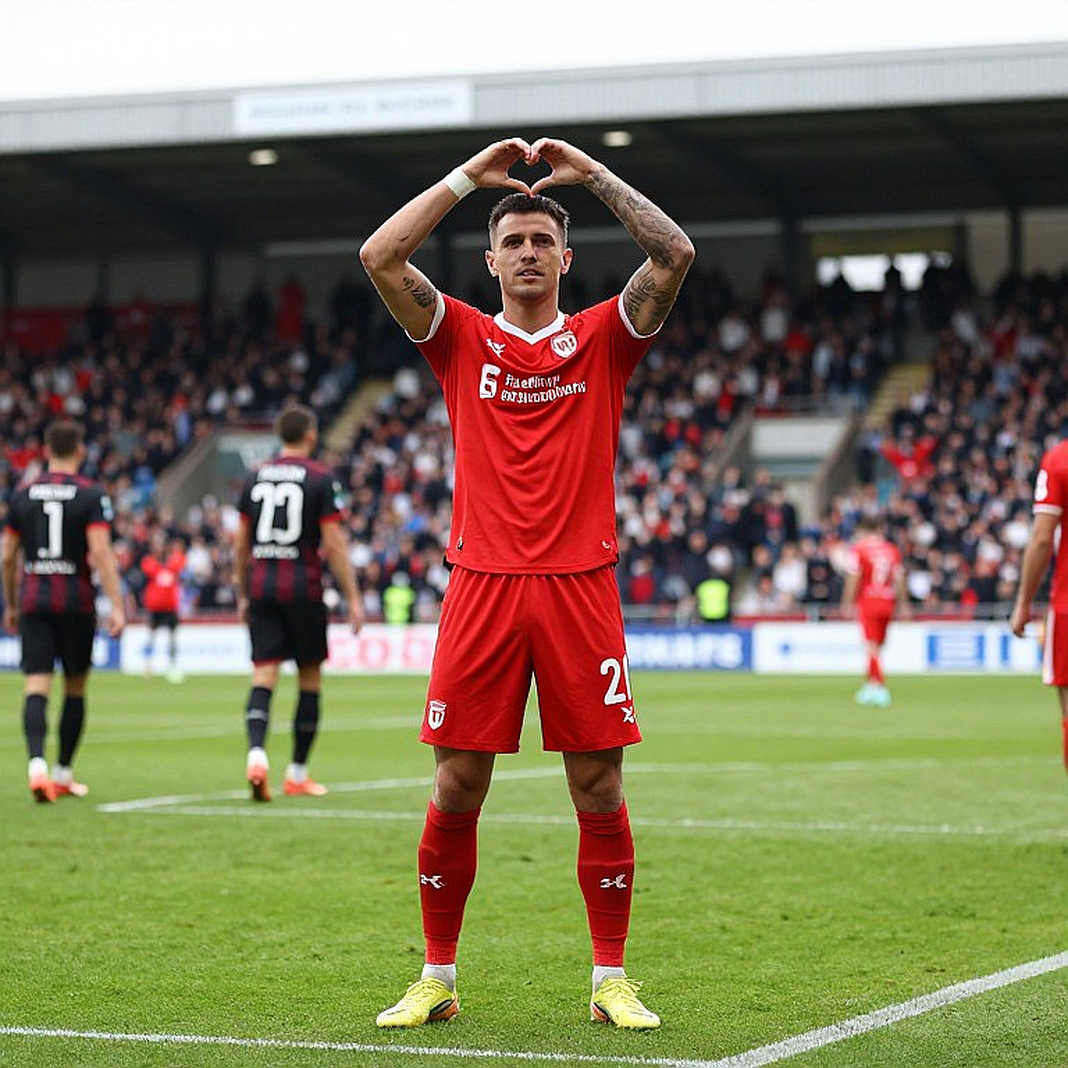
In this article, the hard facts are strong enough. The only conclusion they support is this: Liverpool are searching. Tottenham are holding. Neither has done anything official.
The contrarian angle: the deal not happening is the information
Here is where I go against the conventional read.
The conventional read is: if the story is right, Liverpool will sign Van de Ven; if it is wrong, ignore it. That read discards the most important part.
In the transfer market, most stories do not produce transfers. They produce other things: a renewal negotiation, a wage adjustment, a public retention statement, a price benchmark set for the next window. A story about "a big club watching a smaller club's captain" does a great deal of work without anyone signing anything.
It lifts the player's reference price. It applies pressure on the owning club in future renewal talks. It creates a comparison point for an entire cohort of young centre-backs across Europe. And it gives the buying side a pretext to demonstrate that it is acting with a plan — that it saw the problem before the problem exploded.
That is why I rarely ask whether a deal will happen. That question answers nothing. The right question is: if it does not happen, who benefits, and how long does the story live.
For this article the answer is fairly clear. If the deal dies, the player side gains a reference point for negotiations. Tottenham gains a reason to tell the player he matters enough that big clubs are watching. Liverpool gains another line in its long-horizon planning file. And the representative gains another week of his client in the headlines. Four parties, four interests, zero signatures.
There is one other possibility I leave open, at lower confidence. A contract signed in August almost certainly reset his wage reference upward. Any suitor must clear two thresholds at once: Tottenham's fee threshold and the player's new wage threshold. Two thresholds simultaneously reduce the probability of completion beyond a level I am unwilling to quantify, because the data is not there.
One detail to re-verify: the timeline
The article awards Van de Ven the captaincy for 2026-27, records 96 appearances before the current campaign began, and records Van Dijk's contract expiring in June 2027. Those three dates sit very close together. That may simply be how the piece aggregates information. It may also be an extraction artefact.
I draw no conclusion here. I only raise a process warning: when an article contains three nearby dates, verify its reference point before treating any of them as hard data. In my line of work, a three-month discrepancy can flip an entire conclusion about how long a contract has left.
The internal flow of the Premier League
There is a larger layer in this article, and I think it is the most readable part.
Historically, talent drainage in European football was described along a vertical axis between leagues: England's biggest clubs taking players from the Netherlands, France, Portugal, Brazil. This article describes a different axis, horizontal, inside a single league: a title contender taking the captain of an aspirant that is trending downward.
That model has very different consequences. The player needs no language adaptation, no adaptation to league intensity, no climate adjustment, and no adaptation-risk discount priced into the fee. Purely as football, it is the most efficient transfer type that exists. Structurally, it is the most concentrating type, because it moves talent from the middle tier to the top tier without any intermediary.
If the model repeats, the Premier League's middle tier thins. Not in number of clubs, but in the number of international-class players who stay long enough to become symbols. That is a long-horizon structural signal worth tracking independently of any individual story.
There is a secondary national-team layer. Van Dijk and Van de Ven are both Dutch. A same-nationality centre-back pairing playing together at club level is an advantage for the national team — and simultaneously a concentration of one country's defensive talent inside a single club environment. Two faces of the same fact.
Takeaway: five signals to watch, and one principle
I do not read this article as a transfer announcement. I read it as a record of a process still at a very early stage.
Five signals are worth watching. First, Van Dijk's renewal progress: if talks freeze or collapse, the succession clock speeds up. Second, any verified reporting on a release clause in Van de Ven's deal: if one exists, the entire legal picture changes. Third, Tottenham's results trajectory: sustained decline could shift their stance from retaining to monetising for a rebuild. Fourth, the emergence of a primary-source confirmation of genuine contact: only then does the story leave rumour territory. Fifth, Van de Ven's medical record, particularly soft-tissue and hamstring history: a defender who plays by sprinting carries a different medical risk profile from one who plays by position.
And here is the principle I keep across all my years working with numbers: when a transfer story has strong hard facts on the contract side and weak data on the football side, trust the contract and wait on the football. Time will settle the rest. The reader's job is to know where he stands in that sequence — and not to mistake a wish for a signed agreement.