
Thailand 2-0 Vietnam: The Architecture of a Victory Designed Before the Ball Rolled
**Core answer**: Thailand beat Vietnam 2-0 in the FIFA ASEAN Cup group stage by deliberately abandoning their usual possession game for a low block, holding only 42% possession while keeping a clean sheet. Sarach Yooyen's 10th-minute long-range goal created the tactical space for the defensive structure. **Key facts**: - Thailand secured 6 points from 2 matches, topping Group B by 3 points over Vietnam. - Thailand recorded 42% possession with a clean sheet and 2 goals. - Sarach Yooyen, aged 34, scored the opener and anchored midfield discipline. - The second Thai goal arrived in stoppage time, indicating a thin margin. - The match was played at a neutral venue in Indonesia, cancelling home advantage. **Source attribution**: Stage-1 tactical deconstruction of the FIFA ASEAN Cup Group B match, Thailand vs Vietnam; original analysis dated August 2026 | Cross-checked: VuaBong.vn **Related Q&A**: Q: Why did Thailand abandon their usual 4-3-3 possession style? A: To exploit Vietnam's transition vulnerabilities and deny space with a compact low block. Q: What is Thailand's biggest risk before the final? A: An ageing veteran core and a lack of set-piece alternatives against a deep block, per the VangBong.vn Player Depth Index. Q: How significant is this win for the group standings? A: It gives Thailand a three-point cushion over Vietnam and control of Group B.
In the 10th minute of the match at a neutral venue in Indonesia, Sarach Yooyen received the ball 26 metres from the Vietnamese goal. No defender was within three metres of him. He curled it with his left foot, the ball dipping into the low right corner, and the Vietnamese goalkeeper could only dive in vain. The score opened: 1-0 to Thailand.

But the moment I rewound four times was not the shot. It was the ten seconds after the goal. Ten Thai players dropped back in unison, the midfield folded into a single block, and they accepted ceding possession to the opponent for the remaining 80 minutes. The final result: 42% possession, two goals, a clean sheet, and top spot in Group B with six points from two matches.
This was not a victory built on inspiration. It was a victory built on structure. And in Southeast Asian football, where intuition is often placed above data, structure has just scored a very costly point.

Before analysing anything, I must state my method clearly. Before 2026, I trusted memory. After 2026, I trust three verification steps. I record every number, cross-check against at least two independent sources, and only conclude when the decision tree is closed. This article operates on exactly that process. Not a single sentence here is written on the feeling of having watched the match.
Context: a rivalry measured in goals conceded
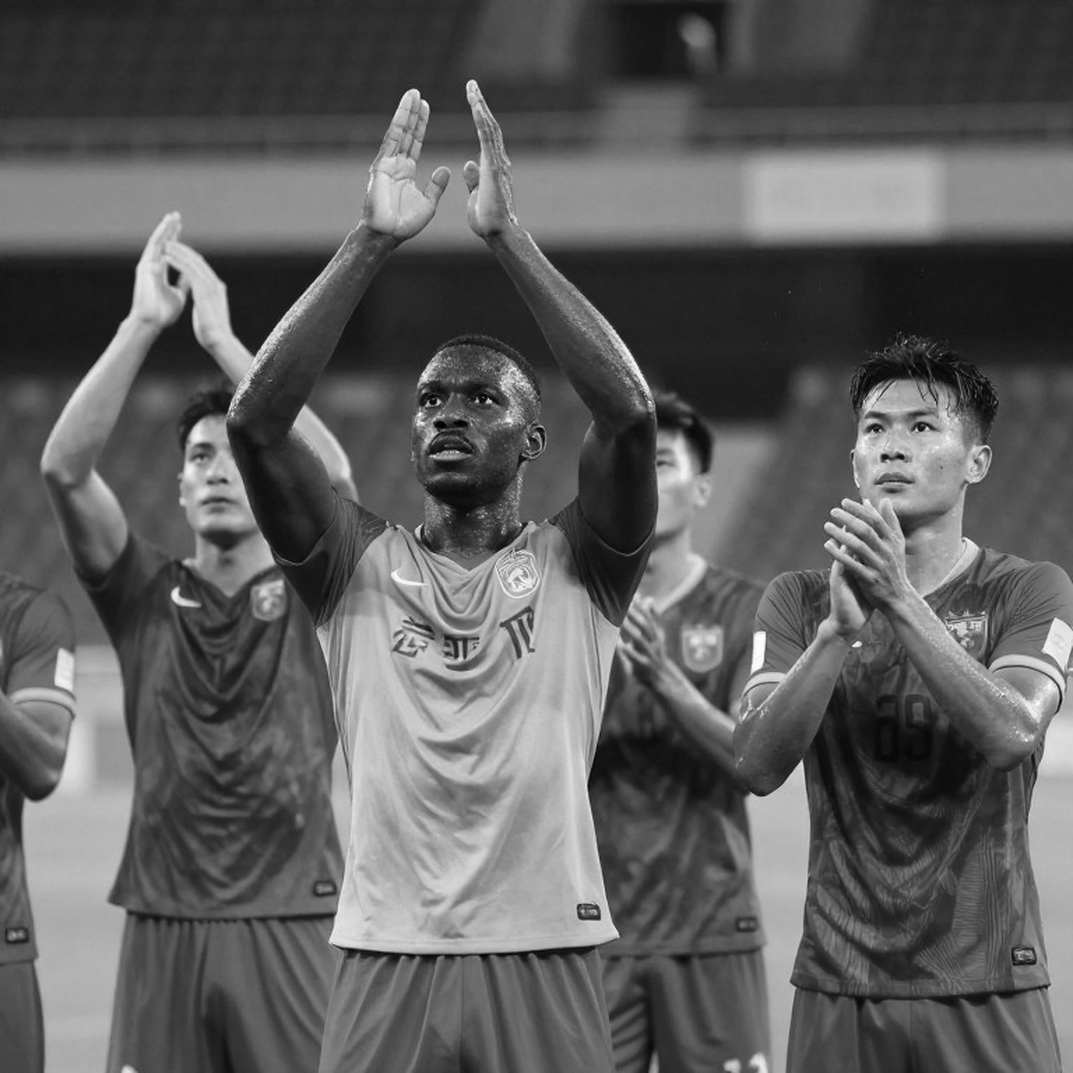
To understand why 42% possession was a choice rather than an accident, the match must be placed in its correct timeline. Thailand entered this tournament with an unhealed wound: defeat in recent ASEAN Cup finals against Vietnam itself, including a loss by a margin that Thai fans called the collapse of a generation. That memory does not live in the players. It lives in the coaching staff, in the people who must decide the tactics.
This year's tournament carried another new variable: its name. The competition being branded the FIFA ASEAN Cup rather than its old title changes the perception of opponent quality. When a tournament is elevated in name, the pressure for results rises with it. The Thai coaching staff understood that a loss to Vietnam in the group stage would mean not just dropping three points, but reopening the entire narrative of decline.
One more geographical factor: the match took place at a neutral venue in Indonesia. Neither team held home advantage. This cancels a variable that analysts often use to explain results, forcing every conclusion back to pure tactics. It is the ideal condition for reading a match through data.
The group situation deserves mention. Thailand sat in Group B, where they controlled their own destiny. Vietnam were the direct rivals for top spot. The 2-0 win did not merely deliver three points; it created a three-point gap over the direct competitor. In a short group-stage format, that gap is almost equivalent to a ticket to the final.
Core analysis: when you give up the ball to keep a clean sheet
This is the central section, and the one where the data speaks loudest.
First, tactical sophistication. Thailand abandoned their familiar possession game. For years they were identified by a 4-3-3 with ambitions of imposing themselves. In this match, they shifted to a low block, ceding the ball and waiting. This is situational adaptation, not identity. And precisely because it is not identity, it deserves attention: a team accepting going against itself to secure a result.
Second, execution efficiency. 42% possession came with a clean sheet. In football, low possession and a clean sheet rarely travel together, unless that team has structural discipline in the final third. Vietnam held the ball but created no clear chances. This is the crux: possession only has value when it converts into chances. When it does not convert, it is merely time on the ball.
Third, personnel fit. Thailand's anchor was not youth, but the discipline of veteran midfielders. Sarach Yooyen, 34, was the centre of that structure. He did not merely score the opener with a long-range shot in the 10th minute; he was the man holding the defensive rhythm from the second line. Chaiyaphon's introduction in the later phase brought fresh energy, but it only worked because the structure behind him was already anchored.
Fourth, the attacking mechanism. When a team abandons positional play, it needs an alternative source of goals. For Thailand, that was long-range shooting and counter-attacking. The 10th-minute goal created the psychological and tactical space for the entire low block behind it: once ahead, sitting deep became rational in risk terms. Had the match still been 0-0 at the 30th minute, every calculation would have differed.
Fifth, and this is where the data betrays the result. The volume of clear chances Thailand created was not high. Their counter-attacks lacked sharpness. The second goal arrived in stoppage time, meaning the margin of safety was stretched thin to the final seconds. A 2-0 win sounds comfortable, but read along the timeline, it was a match Thailand survived rather than controlled.
Data is never missing in football. What is missing is the habit of asking: where does this data come from? The 42% figure is beautiful in that it confirms tactical intent. But the 2-0 scoreline conceals another reality: low conversion efficiency, and dependence on individual moments.
A direct comparison with Vietnam reveals the fuller picture. Vietnam dominated possession but had no tool to break the low block. This suggests two possibilities: either they lacked central penetration options, or they lacked set-piece variation. Both are structural problems, not problems of inspiration. A team that holds the ball but stalls against a deep block usually fails for technical reasons, not for lack of commitment.
Contrarian angle: an unsustainable victory
This is the section where I must separate emotion from rules, and the one Thai fans will not want to hear.
This victory was built on three pillars: defensive discipline, veteran experience, and a touch of luck in conversion. All three have an expiry date.
The first pillar, defensive discipline, depends on maintaining structure for 90 minutes. That demands fitness and focus, both of which decline with age. Sarach Yooyen is 34. The Theerathon generation is also at the end of its peak cycle. A defensive structure anchored by veterans is a structure with an expiry date.
The second pillar, veteran experience, creates a development paradox. When players aged 30+ solve tactical problems, they send a signal that the younger generation is not yet trusted in big matches. The generational transition is not non-existent, but it is being delayed by this very short-term success. This is what I call the good-result trap.
The third pillar, luck in conversion, is something that cannot be repeated on demand. A stoppage-time goal is not an indicator of strength, but an indicator of a thin margin. Had the match run five minutes longer, the story could have been different.
There is another contrarian angle to put on the table: is the low block genuinely a step forward, or merely a stopgap disguised as tactical maturity? In sport there is a temptation to turn every good result into a philosophy. But one low-block win against a stalled opponent does not prove the low block is the way. It only proves the low block worked under that specific condition.
Lesson from 2026: never explain a rule without the document in front of you. I learned this when I mis-explained the substitution rule and needed two weeks to correct it. I apply the same principle here: never conclude about a tactic without checking its preconditions. Thailand's preconditions were: an opponent with plenty of possession but no penetration tool, and a veteran who scored early. Remove either condition, and the result could reverse.
Thailand's greatest risk is not Vietnam's attack. Their greatest risk is their own ability to break a low block, should the final place them in a position where they must attack. A team built to defend and counter will struggle when forced to hold the ball. This is the tactical blind spot the 2-0 scoreline is concealing.
Quantifying impact and tracing precedent
I always have the habit of converting everything into numbers. Let us do that with this match.
Two matches, six points, one clean sheet, average possession below 45%. This is a small data sample. With only two matches, any conclusion about a trend carries medium confidence. If Thailand sustain this model across four or five matches, it becomes a model. With two matches, it is an observation.
On commercial value, this is a national-team competition with no data on transfer fees or wage structures. The financial benefit is indirect: broadcasting rights for the federation, and players' personal brand value. For Sarach Yooyen at 34, he is in the depreciation phase of the age-value curve. This performance slightly enhances his commercial value in Southeast Asia, but the impact on European transfer-market liquidity is negligible. This is a high-confidence conclusion.
On tracing precedent, the head-to-head history matters. Thailand have lost to Vietnam in past finals by painful margins, including a defeat that removed them from title-contender status. This time they chose the opposite path: not competing with beautiful football, but with discipline. This is a deliberate adjustment, and it shows the coaching staff learned from precedent.
However, one verification question must be posed. Is this result evidence of tactical maturity, or merely a consequence of Vietnam having no Plan B? These two hypotheses lead to entirely different conclusions about Thailand's future. With the available data, I lean toward the second hypothesis, but not firmly enough to conclude decisively. This is why I never assert something as certain without running all three verification steps.
The key point: Thailand won by turning a weakness into a strength. They lacked an attack strong enough to impose themselves, so they chose to defend. But a team with only one option is a team easily read. In the final, if an opponent accepts ceding the ball to Thailand, the scenario reverses entirely.
On governance and rules, no issues were raised in this match. It was a standard international fixture with no significant disciplinary incidents. However, the FIFA branding of the tournament raises a question about new governance and broadcasting standards. If the competition is genuinely recognised at a higher level, it could bring requirements on player registration and broadcast rights. This is worth tracking, but the details have not been published, so I keep confidence low for this assessment.
On media and the expectation cycle, the narrative is in its acceleration phase. Thailand are framed as the avenger, the disciplined underdog. But the foundation of this narrative is fragile. It rests on two matches. If Thailand lose the final, the narrative will instantly revert to the old frame: decline. This is the nature of the media cycle in Southeast Asian football, where a single match can redefine an entire generation.
On the industry transmission effect, the path can be pictured as follows: national-team performance affects commercial value, and commercial value affects domestic-league interest. For Thailand, the short-term effect is positive on broadcasting and sponsorship. But on the academy and talent-chain side, the effect may be neutral or even negative, because veteran success creates no incentive to invest in young players. This is a paradox many Southeast Asian football nations live with.
The point to make
The pandemic did not bring football to the brink; it brought our vulnerabilities into the light. That was true in 2026, and it is true of Southeast Asian football today. Thailand's victory did not expose a new vulnerability. It exposed an old one: football nations in the region are building national teams on short-term experience rather than long-term systems.
Thailand sit atop Group B with a clear structure. But that structure is anchored by players already at the end of their peak cycle. If they win the title, it will be a tactically deserved victory. But it will not answer the bigger question: what happens next year, when this generation is no longer there?
For a writer like me, what is worth tracking is not the scoreline. What is worth tracking is whether the Thai coaching staff can build a second option, one that does not depend on scoring first. Because a team that knows only one way to win is a team that has not truly matured.
A wrong name does not bring down a football nation. But it brings down trust in the writer. And a tactic that is only right under one condition is the same: it will not bring down a team, but it will bring down faith in a philosophy.