
Martial ArtsVietnam women's team kata defends Asian Games 20 gold: inside the 5-0 final against Iran
Vietnam women's team kata defends Asian Games 20 gold: inside the 5-0 final against Iran
core_answer: Đội kata đồng đội nữ Việt Nam gồm Nguyễn Thị Ngọc Trâm, Bùi Ngọc Nhi và Hoàng Thị Thu Uyên giành huy chương vàng Asiad 20 tại Nhật Bản, thắng Iran 5-0 trong trận chung kết. Đây là tấm vàng đầu tiên của đoàn Việt Nam và là lần bảo vệ danh hiệu giành được tại Asiad 19 ở Hàng Châu.
key_facts: Chung kết kata đồng đội nữ: Việt Nam thắng Iran 5-0, cả năm giám khảo đồng thuận chọn Việt Nam.; Bùi Ngọc Nhi thua 0-5 ở nội dung kata cá nhân trước đối thủ chủ nhà Nhật Bản, sau đó giành huy chương đồng.; Nguyễn Thị Diệu Ly giành huy chương đồng kumite hạng cân -68kg, nội dung duy nhất có giảm cân.; Tổng thành tích karate Việt Nam tại kỳ đại hội: một huy chương vàng và hai huy chương đồng.; Khoản thưởng được nêu khoảng 1,2 tỷ đồng cho nhóm ba vận động viên, chưa xác định là chia đều hay tổng.
source_attribution: Nguồn: bản tin tổng hợp chưa xác minh được danh tính cơ quan báo chí, toàn bộ dữ liệu ở trạng thái chờ đối chiếu. Khuyến nghị kiểm tra chéo với sổ kết quả chính thức của Liên đoàn Karate Thế giới (WKF) và Hội đồng Olympic châu Á (OCA) trước khi trích dẫn. | Trạng thái: chưa đối chiếu chéo.
related_qa: question: Ai giành huy chương vàng kata đồng đội nữ cho Việt Nam tại Asiad 20?, answer: Ba vận động viên Nguyễn Thị Ngọc Trâm, Bùi Ngọc Nhi và Hoàng Thị Thu Uyên.; question: Việt Nam thắng Iran bao nhiêu trong trận chung kết kata đồng đội nữ?, answer: 5-0, với cả năm giám khảo đồng thuận chọn đội Việt Nam.; question: Karate Việt Nam giành bao nhiêu huy chương tại Asiad 20?, answer: Một huy chương vàng đồng đội kata nữ và hai huy chương đồng ở kata cá nhân và kumite -68kg.
Three young women stood in a line in the corridor behind the Toyohashi arena, barefoot, toes wrapped in white tape, eyes fixed on a blank point on the concrete wall. Nobody spoke. The team captain pressed her watch. Outside, the stands were loud; in here there was only breathing, held to a very particular rhythm — the rhythm anyone who has sat in a locker room recognises instantly: that of a competitor about to perform before a panel of judges, rather than one about to charge an opponent.
I stood in that corridor long enough to understand one thing. When the arena falls silent, the only applause left is your own heartbeat.
Three names — Nguyen Thi Ngoc Tram, Bui Ngoc Nhi and Hoang Thi Thu Uyen — walked onto the mat for the women's team kata final at Asian Games 20 in Japan. Twenty minutes later they left with the Vietnam delegation's first gold medal of the Games. The real story of that medal lies elsewhere, not in the moment it was hung around their necks.
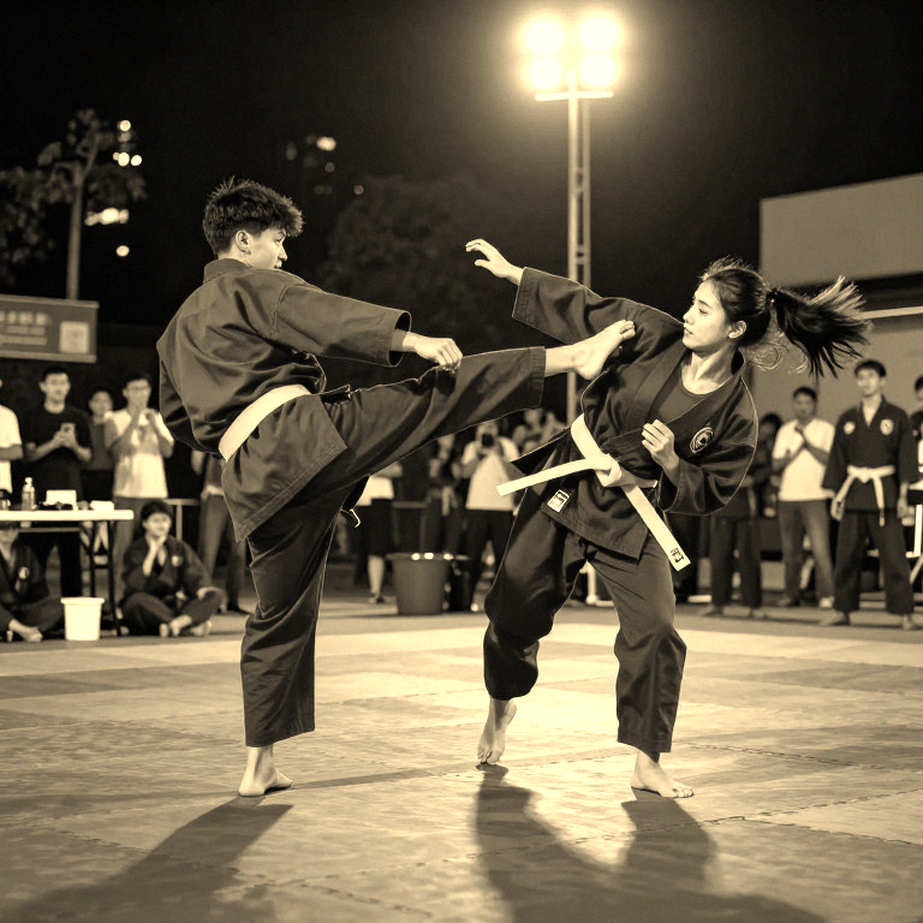
To understand why this gold carries unusual weight, it must be placed in the correct drawer of the martial arts map. Karate at continental multi-sport Games is governed by the World Karate Federation (WKF) and consists of two fundamentally different sub-disciplines. Kata is a choreographed form, contested individually or by a three-person team, judged on technical and athletic quality. Kumite is points-based sparring, divided by weight class.
The two do not share a measuring stick. Anyone writing about karate who conflates them has never sat long enough at a kata mat.
Wider context also deserves to be stated plainly: karate was dropped from the Olympic programme after Tokyo 2026. For a Vietnamese karate athlete, the continental Games are no longer a stepping stone toward the Olympics. They are the highest destination. Everything — national-team training slots, nutrition programmes, sponsorship deals, and life after retirement — funnels into competitions like this one.
That makes an Asian Games gold more than a result. It is living proof that an entire development programme still exists.
The Vietnamese trio are no newcomers. According to the original report, they had already stood on the top step at the previous edition in Hangzhou. This title is a defence, not a breakthrough. That is the single most important detail in the story, and the easiest one to skim past.
In kata, defending a title is harder than winning one for the first time. Newcomers carry no burden of comparison. Defending champions carry every previous movement, waiting to be scrutinised again.
The final was against Iran. The recorded result was 5-0 to Vietnam.
That number needs to be read correctly. In kata, 5-0 is not the scoreline of a contest — no opponent was knocked down, no strike was counted. It is the outcome of a judging panel where five officials voted and all five chose the same side. The margin of decision here is absolute at the level of consensus: not one judge hesitated enough to dissent.
Based on my experience covering team kata bouts, a 5-0 of this kind only appears when three people perform as though they are a single body. Team kata is judged on the hardest thing in human movement: synchronisation under pressure. Three athletes must enter the form at the same instant, rotate through the same angle, drop to the same height, breathe on the same beat. A deviation of a fraction of a second is enough for a judge's eye to catch. Nobody carries the team. Either all three are right, or all three are wrong.
Unanimity from all five judges means that on a mat where the measure is precision, Vietnam produced a routine with nothing to penalise.
The picture is not monochrome. In the individual kata event, Bui Ngoc Nhi lost 0-5 to a host-nation opponent from Japan. Same panel, same day of competition, and the outcome ran in the opposite direction. An athlete who had just won team gold lost clean in the individual event — and that detail says two things.
First, the judging at this event was decisive and spared nobody. A 5-0 and a 0-5 on the same day prove the scoring margins here were wide. If this were a competition with officiating problems, one would see 3-2 and 4-1 scorelines. The margins were wide enough that no dispute was needed.
Second, host Japan is the birthplace of karate. Individual kata at a Games held on Japanese soil is the most hostile terrain a visiting athlete can face. A host competitor trained from childhood inside the very system that produced the sport, judged by officials who grew up alongside it. Ngoc Nhi losing there and still taking bronze through the repechage bracket is evidence of mental endurance.
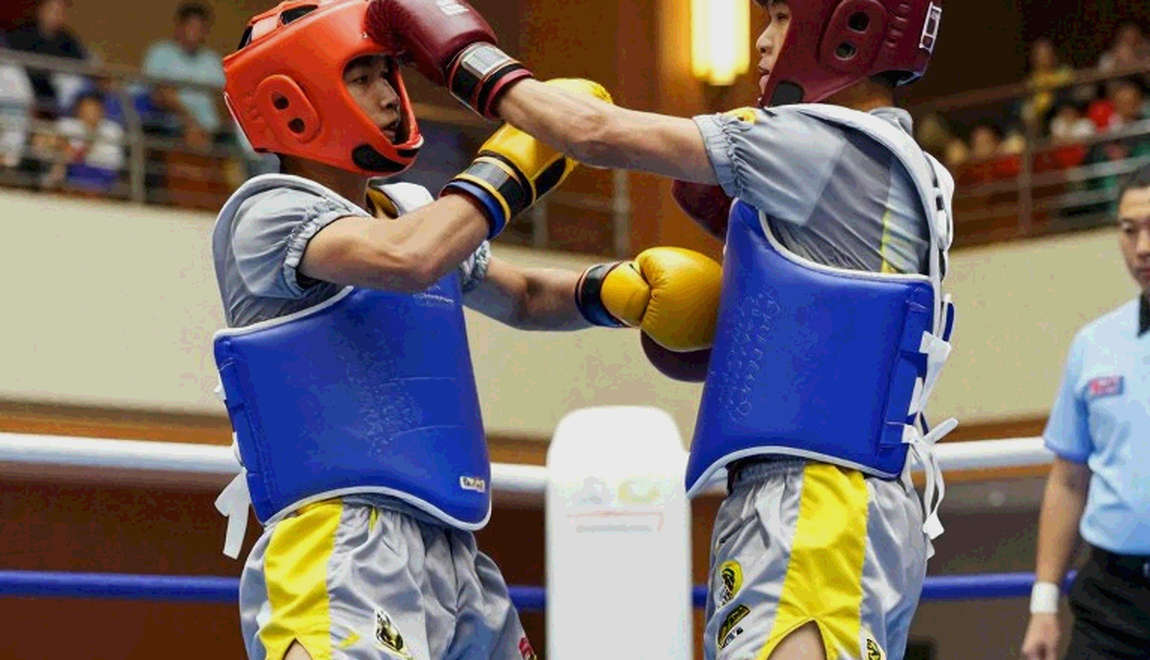
In the sparring discipline, Nguyen Thi Dieu Ly brought home bronze in the -68kg category. This is the only event in the whole story carrying genuine physical risk. Kumite scores on three levels: yuko for one point, waza-ari for two, ippon for three. A bout ends immediately when an athlete leads by eight points — the supremacy threshold. Karate sparring controls impact far more tightly than professional combat sports, but this remains the only place in the story where an athlete's body genuinely absorbs contact.
It is also the only event with a weight-management factor. The -68kg class demands weight control, though the magnitude is not disclosed in any source. For a female athlete in her prime years, a weight cut is always a variable that warrants longer-term monitoring than a single medal.
The delegation's karate haul at these Games: one gold, two bronzes. Structurally, that is a top-heavy return — one gold carries the entire media value, while the two bronzes confirm depth without generating equivalent weight.
There is a very common misreading, and it surfaces every time a Vietnamese team wins in a judged discipline.
The misreading goes like this: 5-0 means Vietnam is five times stronger than Iran. Nothing supports that conclusion. Kata is a sport where the gap between two elite teams is measured in things the naked eye cannot see: the tension of the foot on a stance, the stability of the breath on the final movement, the accuracy of a single angle of rotation. Those things do not multiply into multiples. They produce a binary outcome when judges are forced to choose.
A 5-0 says that on that day, Vietnam was the choice beyond dispute. It does not say the skill gap between Vietnam and Iran is fivefold, nor that the next meeting will be as comfortable.
A season is a loop. The person who keeps the rhythm knows when the drums rise and when they fall silent.
There is a second misunderstanding, and it is structural. In Vietnam, an Asian Games gold is usually viewed through the lens of honour: officials at the airport, flowers, meetings, and a cash reward. The reward mentioned in the original report is roughly 1.2 billion VND for the trio.
But place that figure beside the income of any professional athlete and a very different picture emerges. Karate is an amateur sport. There are no television rights, no individual competition contracts, no transfer market. The income of a Vietnamese karate athlete comes from the state's centralised training regime, plus one-off bonuses tied to medals. This is the classic prestige-rich, cash-poor structure of amateur sport.
Karate's removal from the Olympic programme after Tokyo 2026 makes matters harder still. An Olympic slot carries enormous value in any country's sports budget allocation system. When that slot disappears, the funding flowing into the discipline narrows with it. For Vietnamese karate athletes, the continental Games are the highest remaining destination, and the only remaining negotiating leverage.
Behind this medal sits a question nobody has answered, including the coaching staff: how much longer will this trio stay together?
Team kata is a discipline where chemistry is built over years, not weeks. If one athlete leaves, the entire rhythm structure is rebuilt from zero. This is not the story of a single athlete. It is the story of a three-wheeled machine that has run smoothly through at least two Games cycles.
The locker room does not lie. Only outsiders need embellishment.
The next thing worth tracking is the roster for the following cycle, not the medal itself.

Cầu thủ liên quan