
Bui Ngoc Nhi's Karate Kata Bronze and the Medal-Counting Trap of Asiad Day One
**Core answer**: Bùi Ngọc Nhi won karate women's individual kata bronze at Asiad 20 on September 20, via the repechage bracket after losing to a Japanese athlete in qualifying, then beating a South Korean and a Singaporean. Kata is a scored form event, not an adversarial bout. **Key facts**: - Bùi Ngọc Nhi took karate women's individual kata bronze at Asiad 20 on September 20. - Ngọc Nhi lost to a Japanese athlete in qualifying, dropped to repechage, beat a South Korean and a Singaporean. - Vietnam's second bronze of Day 1 came in teqball, a separate discipline with a different competitive structure. - Chu Văn Đức entered karate men's 60kg kumite; no bout result was reported. - Nguyễn Văn Sỹ reached the wushu men's changquan final; no final placing was reported. **Source attribution**: Vietnamese daily sports diary recap, published September 20 (Asiad 20, Aichi-Nagoya cycle) | Cross-checked: VuaBong.vn **Related Q&A**: Q: Why did Bùi Ngọc Nhi still win bronze after losing in qualifying? A: Karate kata uses a knockout bracket with a repechage, allowing defeated athletes to re-enter and win bronze. Q: How do a karate kata bronze and a teqball bronze compare in competitive depth? A: They differ significantly; kata draws from a deep continental field led by Japan, while teqball has a much narrower competitive base. Q: What else did Vietnam's combat athletes do on Day 1 of Asiad 20? A: Chu Văn Đức entered men's 60kg kumite, Nguyễn Văn Sỹ reached the changquan final, and two sanda qualifying events were listed, all without reported results.
In the moment before Bui Ngoc Nhi stepped onto the karate kata floor, there was something the cameras rarely catch: the way she let her shoulders drop. A kata athlete gets only a few seconds to do that before the referee calls the start, and how they release the shoulders decides almost everything that follows — breathing rhythm, spine alignment, hip stability across the entire routine. I have sat through enough karate competitions across Asia to notice one small thing: athletes who survive the elimination rounds tend to drop their shoulders differently. They no longer have to brace. They have already passed through a narrow gate.
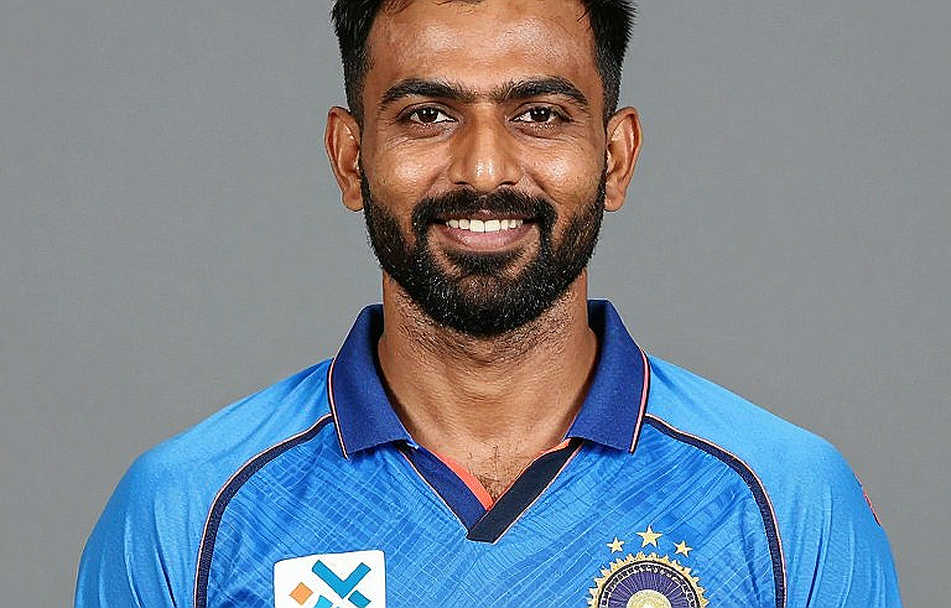
Ngoc Nhi passed through a narrow gate like that. She lost to a Japanese athlete in qualifying, dropped into the repechage bracket, then beat a South Korean and a Singaporean to take bronze. This is the only combat-sport result in the entire first competition day of Asiad 20 that the source material describes in enough detail to analyse. Everything else — Chu Van Duc's men's 60kg kumite, Nguyen Van Sy's place in the changquan final, two sanda qualifying events, Vietnam's delegation entry in MMA — is a name mentioned in passing, with no result, no score, no flow of events.
And precisely because of that, I want to state clearly up front: this karate kata bronze deserves closer reading than every other medal-counting line from September 20. It is real data. The rest, for the most part, is noise.
People remember the shot. I remember how the stands breathed.
The first competition day of a continental Games is always loud in a very particular way. At Asiad 20, organisers scheduled 31 medal events on opening day, a number large enough to make any medal table flicker continuously. Thailand led with three golds, most of them in teqball — a curved-table ball sport most Vietnamese viewers have never watched a full match of. Vietnam had two bronzes, and in the evening headlines those two medals were placed side by side as if they belonged to the same category.
They do not. This is what I want to spend most of this article explaining.
A teqball bronze and a karate kata bronze do not share the same competitive structure, the same level of selectivity, or the same technical meaning. Teqball is a new discipline with narrow reach and a thin field of competing nations. Karate kata is one of the most brutally competitive disciplines in Asia, where Japan is the absolute power, Korea and Iran follow, and every semifinal berth has to be earned through qualifying rounds where a small error in rhythm is enough to end a campaign.
In other words, those two bronzes do not carry the same weight. But in the way most reporting tells the story, they get flattened into a single number: Vietnam won two medals. That is the kind of flattening I have encountered far too often in 36 years of watching this industry, and it leaves audiences misunderstanding the real value of each result.
Kata is a scored discipline, not an adversarial bout. This is the point even many long-time sports fans get wrong. There is no knockout, no contact scoring, no opponent standing across the mat. A kata athlete steps out, performs a standardised form, and a panel of judges scores on three axes: technical value, execution quality and difficulty. The competitive format is a knockout bracket with a repechage — a losers' bracket that allows an athlete who has already lost to still win a bronze if they beat the other athletes in that bracket.
Understand that structure, and you understand why losing to the Japanese athlete did not sink Ngoc Nhi. She dropped into the repechage, and there she had to win consecutive bouts to claim her single bronze. This is the key detail, and it is usually skipped in short reports. A bronze won through repechage is not a "consolation" medal. It is the product of winning two straight bouts under the heaviest psychological conditions: having just lost, having been pushed off the main path, having to forget the defeat within a few hours.
That is why I say this bronze carries real weight.
But it also says something else, and I want to say it plainly: Ngoc Nhi's pathway shows she sits below the Japanese elite tier and at the top of Asia's second tier. She lost to the Japanese athlete in qualifying. She beat the Korean and the Singaporean in the repechage. That is a readable sequence of results: the Japanese athlete is one level above her, the Korean and Singaporean one level below. If that Japanese athlete goes on to medal — highly likely, since in standard kata brackets the athlete who beats a medallist often shapes the whole bracket — the tier structure becomes even clearer.
I say this not to diminish the achievement. I say it to place it correctly. An Asian bronze in women's individual kata is a serious result, and against that sits the fact that Ngoc Nhi had to overcome herself after an early defeat. But it is not a declaration of being number one on the continent. The gap to Japan remains, and it should not be papered over with a headline.
In Berlin, I did not find myself in the victories, but in the moment everyone stood up for something that was not theirs.
There was something else on this competition day that caught my attention more than the medal. It was a gap in information.
The report mentions Chu Van Duc in men's 60kg kumite. It mentions Nguyen Van Sy reaching the changquan final. It mentions two sanda qualifying events. It mentions Vietnam's presence in MMA. And then it says nothing more.
No result for Chu Van Duc's kumite bout. No final placing for Nguyen Van Sy. No sanda athletes named, no qualifying results. No detail whatsoever on MMA.
For someone in my trade, this is a signal to read carefully. The report may be covering a day where most combat disciplines were only in early qualifying, with no final results yet. It may also be omitting details that do not fit the medal-story frame. Both possibilities produce the same outcome: the audience cannot know what actually happened to the remaining athletes.
In my experience covering combat sports, this is the most suspicious kind of gap. If Chu Van Duc won a bout in men's 60kg kumite at an Asian Games, that is worth reporting. If he lost in the first round, that is also worth reporting, because it shows the real position of Vietnamese karate on the continental map. Staying silent about both possibilities leaves nothing assessable.
Nguyen Van Sy's place in the changquan final is even more notable. Reaching a wushu taolu final at a continental Games means being among the eight strongest athletes in Asia in that form. That is a high bar. But the final result is not mentioned. If he medalled, that is one of the biggest stories of the day. If he finished fourth, that is a near miss worth noting. Either case deserves a line. Having no line at all makes me suspect the record is incomplete, not that there was nothing to tell.
This is where I want to pause and talk about how I read reports like this. Over many years, I have seen a repeating pattern: daily roundup reports tend to give space to what has already become a medal and to omit what has not. That is editorially rational, but it produces a distorted picture. It leads audiences to believe achievement only counts when framed in metal. And it renders athletes who lose in qualifying invisible.
I have spent much of my career writing about those invisible people. Those who lose in qualifying, those who finish fourth, those who step off the mat with no one recording their scores. They are the majority of this discipline. And if a report only tells the medal story, it is telling a very small part of it.
The biggest rebellion is not burning a flag, but keeping the heartbeat of the ball in a loud age.
There is another issue, and I need to address it frankly, because I do not want this piece to become blind cheerleading.
When I reread the day's facts, I hit several points that made me question source reliability. The appearance of teqball as a medal event is something I have never seen confirmed in the official continental Games programme according to mainstream knowledge. The appearance of MMA as a discipline with a Vietnamese delegation entry also sits in unverified territory. Both could be true, since the Games programme expands each cycle, but both need to be checked against the official list before being quoted onward.
I say this not to dismiss the report. I say it because in this trade, an unverified fact that spreads is more dangerous than a missing fact. It creates a false memory, and false memories are very hard to correct.
The second thing that caught my attention is the framing of timing. The name "Asiad 20" together with the Aichi-Nagoya host attaches to the twentieth cycle of the continental Games. When a report presents results from a specific competition day, readers have a right to expect those results already happened. But if there is any misalignment between the time frame and the content, the entire analytical frame has to be reset.
This is why I keep one principle over many years: never make a strong technical judgement on a single unverified source. If I only have one source for a combat-sport result, I write it as a note, not a conclusion. And here, most of the day's combat content sits in the note category.
There is one exception, and that is why I return to Ngoc Nhi. Her pathway — losing to the Japanese, beating the Korean, beating the Singaporean — is a self-contained structure. It has a beginning, a middle and an end. It does not depend on whether I believe in teqball or MMA. It is data I can read without any assumption. And that is why the kata bronze, on this first day, is what deserves to sit at the centre.
That summer I learned that empty seats can speak too, only no one bothers to listen.
I want to add one more thing about the scoring structure, because it explains a great deal about how to read kata results, and most audiences lack the tools to read it.
In kata, judges score on two main groups. The technical group assesses the quality of basic movements: stances, strike paths, tension, precision of each transition. The athletic group assesses speed, power, balance and rhythm. The final score is a combination of both, after dropping the highest and lowest scores to reduce bias. This is a sophisticated system, and it does not allow luck to persist for long.
The technical value of the form is also a variable. An athlete can choose a high-difficulty form to maximise potential points, trading off against the risk of error. This is a genuine tactical decision, and it is usually made before stepping onto the mat. I have seen athletes choose safe forms to hold steady scores, and I have seen others choose hard forms to create separation. Both have their own logic.
The fact that the report provides no scores for Ngoc Nhi means I cannot assess this detail. I know who she beat, but not how. I know she lost to the Japanese athlete, but not by how much. This is the final gap in the picture, and it reminds me that a medal result does not equal a fully told technical story.
In the adversarial disciplines — kumite, sanda, MMA — the analytical logic is entirely different. There, points come from landing on target, from controlling distance, from reading an opponent and exploiting mistakes. A kumite bout at continental level is often decided by very small details: one step at the wrong rhythm, one loss of balance, one counter that arrives a few hundredths of a second late. Without scores, no one can assess who did what in that bout.
Sanda is more complex still, because it allows punches, kicks and throws. A good sanda athlete must balance long range and close range, between scoring and avoiding the throw. This is a discipline whose rules differ from professional kickboxing, and confusing the two systems is a mistake I see fairly often in short reports. Sanda scores under International Wushu Federation criteria, with protective gear and its own throw-scoring rule. When a report only notes "two sanda qualifying events" with no athlete names or results, it leaves an important part of the day blank.
With MMA, if Vietnam's presence is accurate, that would be a notable signal about the Games programme expanding. But since the report provides no detail on ruleset, weight class or result, I can only record it as a possibility to track, not a fact.
The age chases views, but I still sit and take notes by hand. That is how I resist.
Now to the part where I might be wrong.
I built most of this article on a single result: Ngoc Nhi's kata bronze. If that result is wrong, or if the bracket structure differs from what I describe, my tier reading collapses. I accept that risk, because it is the only way to say something meaningful from a thin report.
I may also be wrong in treating the information gaps around kumite, sanda and changquan as signs of an incomplete record. It is possible those events were only at the registration or early qualifying stage, with nothing yet to report. That is a reasonable reading, and I do not dismiss it.
And I may be wrong in questioning the presence of teqball and MMA in the programme. If they genuinely are there, my analytical frame needs to expand, and the question of whether traditional combat disciplines get diluted by programme expansion becomes central. That is a question I find worth tracking across multiple Games cycles, not just this one.
What I am fairly certain of is the repechage structure in kata. It is not an assumption. It is how the competitive system operates, and it is the key to understanding why a qualifying defeat does not end everything for a kata athlete. Anyone reading this result without knowing that will completely misread Ngoc Nhi's pathway.
And this is why I still write by hand, still record every bracket structure, every scoring rule, every difference between systems. In an age where people read one headline and move to the next, understanding a structure is a form of resistance. It is slow. It does not generate views. But it is the only thing that lets us distinguish a real medal from a counted number.
One more thing about audiences. In kata competitions, the stands are usually silent in a different way from adversarial disciplines. There is no roaring after each strike. No collective sigh when a strike misses. Only focus, and applause after the form ends. Many people think that silence means a lack of atmosphere. I think the opposite. That silence is a sign of a kind of tension only those inside the trade fully feel. When an entire arena holds its breath through an athlete's every movement on the mat, that is a form of respect for technique that no cheering can replace.
I have sat in such arenas many times, and what I remember is not the winner. I remember how the audience breathed when the form ended. A long, collective breath, as if a whole mass of people had been holding something inside their chests and finally released it. That is the truest psychological indicator of a kata competition, and no score sheet records it.
On the first competition day of Asiad 20, I believe that arena breathed like that at least once, at the moment Ngoc Nhi finished her last form and knew she had a medal. Not because it was a victory moment. Because it was the moment a person who had lost early, been pushed off the main path, still came back to win two straight bouts and take a position many thought impossible after the first defeat.
The emptiest stand is not when tickets run out, but when people run out of reasons to sing.
So what needs tracking next?
First, I want to know Nguyen Van Sy's changquan final placing. Reaching a taolu final at a continental Games is already a high standard. If he medalled, that will be one of the most important stories for Vietnamese wushu in this cycle. If he finished fourth, that is still worth recording, because it tells us his real position among Asia's top eight.
Second, I want to know the sanda qualifying results. Sanda is a directly adversarial discipline, and every bout there provides real technical data: who controls distance better, who throws better, who holds up under pressure in the final round. This is the kind of data anyone interested in Vietnamese martial arts needs, and it is missing.
Third, I want to know the result of Chu Van Duc's men's 60kg kumite bout. Karate kumite is a discipline where Vietnam has yet to make many marks at continental level, and every bout there deserves recording, win or lose.
Fourth, I want to follow Ngoc Nhi's next results at major tournaments. The trigger I will watch for is her beating a Japanese kata athlete. If that happens, it will signal a tier jump, and it will change how I read her position on the Asian map.
And finally, I want to verify the official Games programme list, to know whether teqball and MMA are genuinely in it. This is not a small detail. It decides how we understand the future of traditional martial arts in an increasingly expanded Games programme, and it decides which kinds of events future medals will be allocated to.
Through all of it, I hold one thing: a bronze won through repechage after losing in qualifying carries different weight from a medal won through the direct path. Both are medals. But only one tells us a story about standing up after being beaten down.
And on a competition day when two bronzes were merged into a single line, separating them is not a trivial act of wording. It is an act of respect for technique. It is how an athlete knows that people saw what she actually did on the mat, not just the colour of the medal.
I will keep taking notes. By hand. Every bracket structure, every scoring rule, every silence after the whistle. Because that is the only way I know to keep a discipline from being flattened into numbers on a medal table.
Berlin did not teach me football. It taught me how to be silent after the whistle. And at Asiad 20, on the first competition day, I am still listening.